

Roof Repair in Memphis, Germantown and Collierville
Roof Repair in Memphis, Traced to the Source
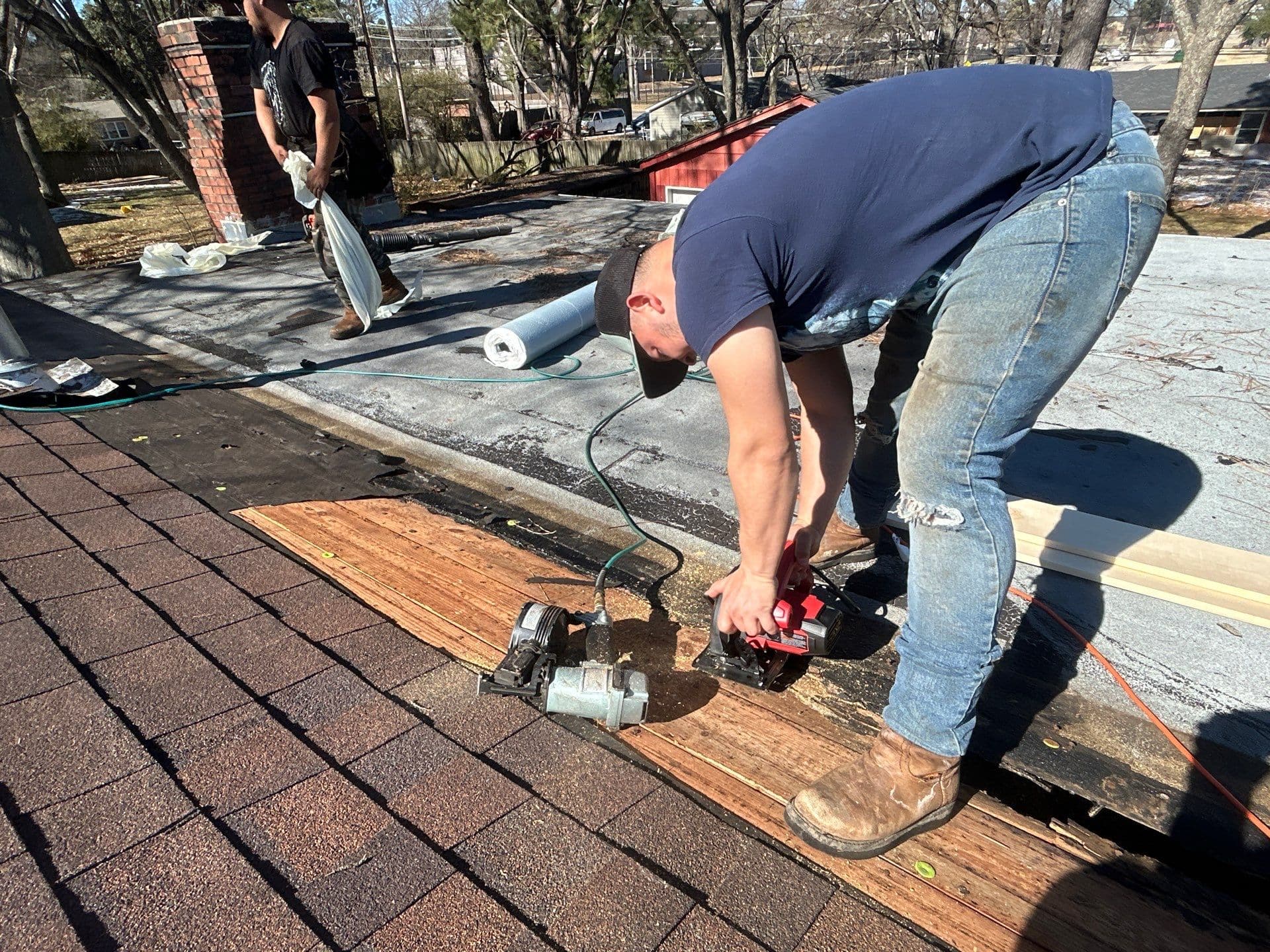
Most leaks start somewhere other than where the stain shows up. We get on the roof, find where the water is really getting in, photograph it, and give you a straight price to fix it.
5.0 on Google (opens Google reviews in a new tab)- F-01Exposed nail heads on flashingTypically a slow, quiet entry point.
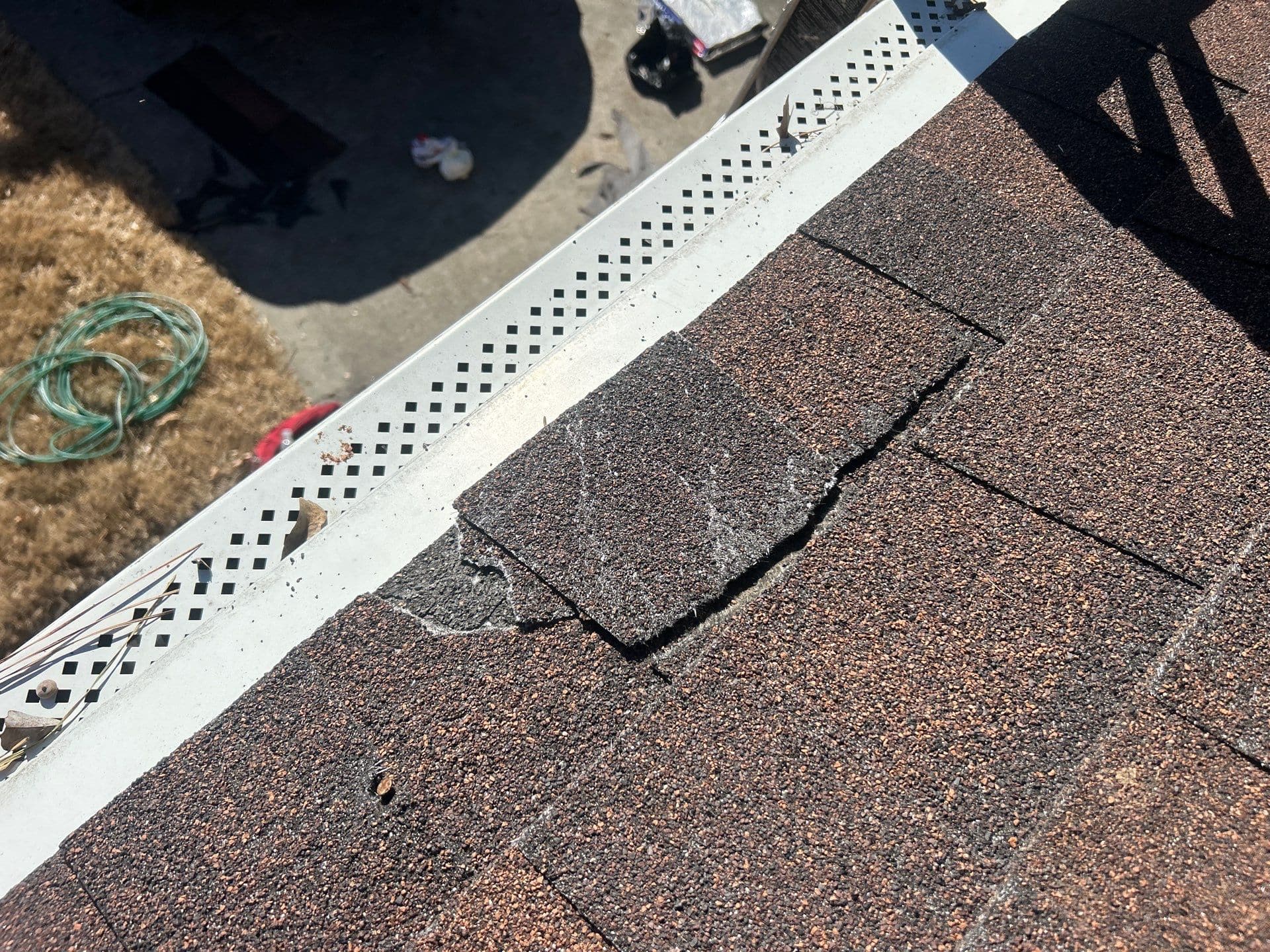
- F-02Lifted shingles and broken seal tabsUsually wind has broken the seal.
- F-03Missing or creased shinglesTypically wind or limb damage.
On this page
Quick answer
What does a proper roof repair involve?
A proper roof repair starts by finding where water or wind actually got in, which is often not directly above the ceiling stain. Reborn Roofing walks the roof, checks penetrations, flashing and valleys, photographs the cause and quotes the specific fix. If the damage is widespread or the shingles are too brittle to patch, we say so.
01Leak investigation
The Stain Is Rarely Directly Under the Leak
Water that gets past a shingle or a piece of flashing does not always drop straight down. It can run along the top of the decking, follow a rafter, or travel across the underlayment for several feet before it finds a seam in the drywall. By the time a brown ring appears on the ceiling, the entry point may be across the room, up beside a chimney, or at a vent pipe on the far side of a hip.
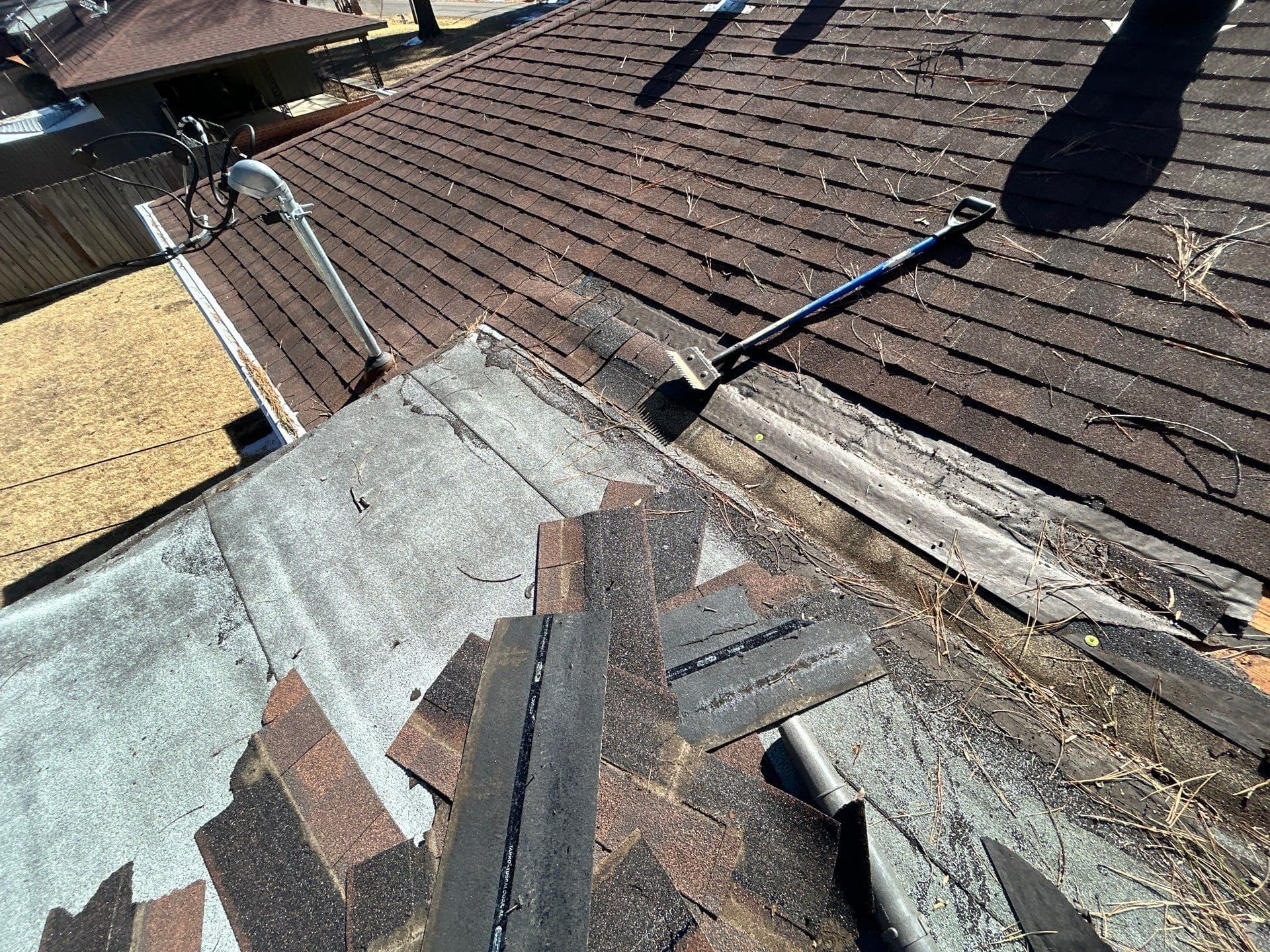
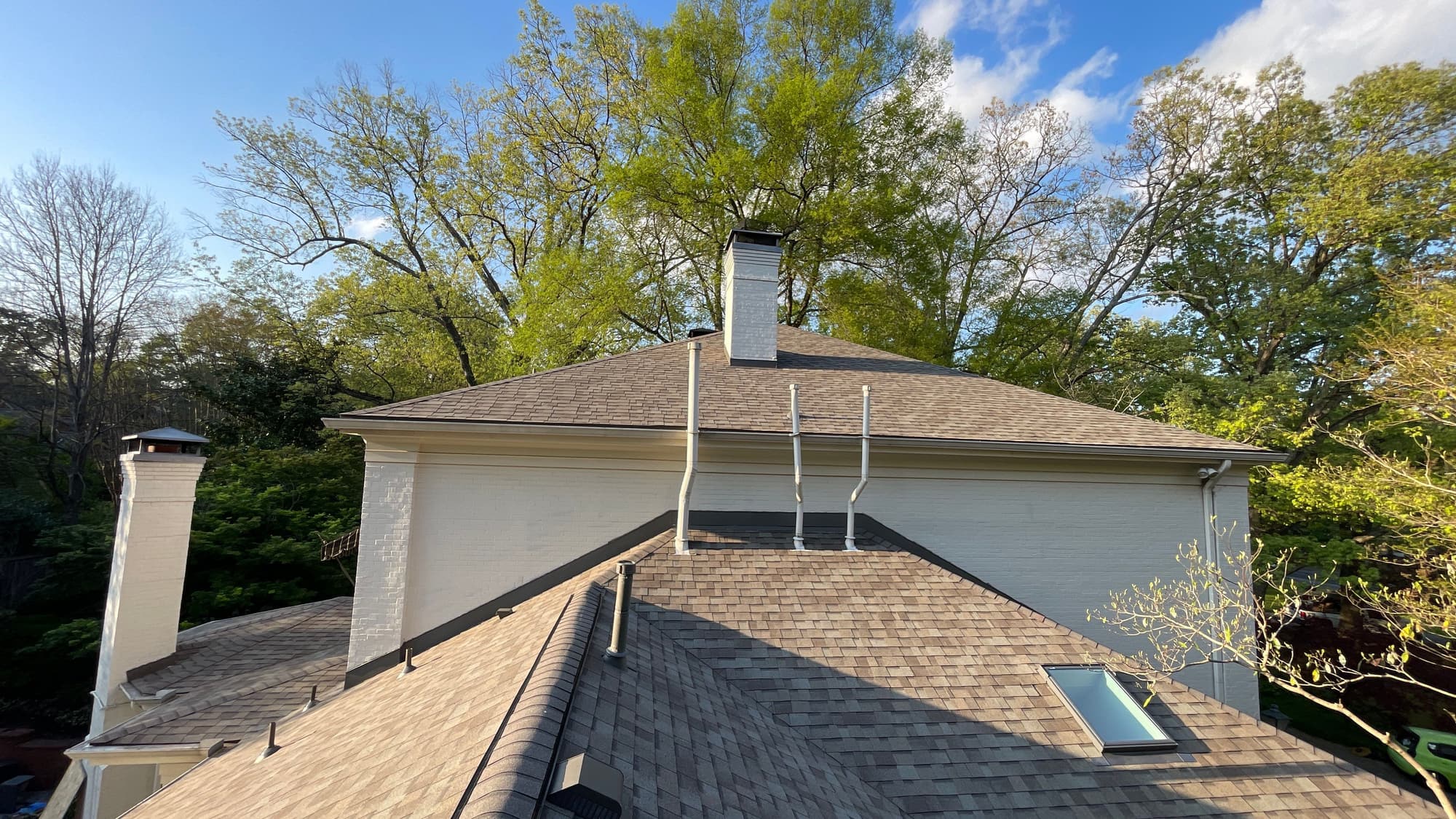
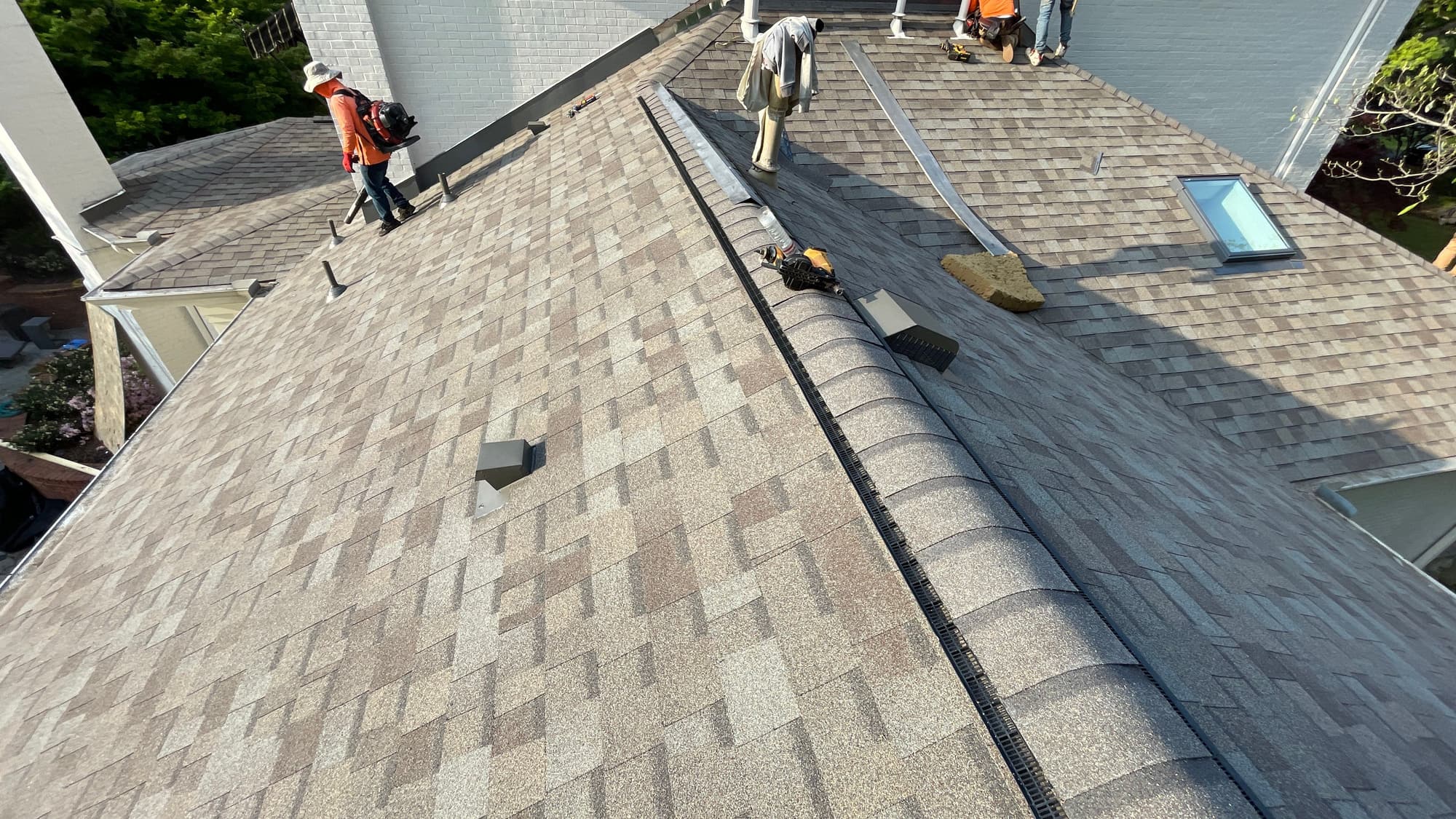
That is why we do not diagnose leaks from the driveway. When conditions permit and it is safe, we get on the roof and work from the outside in: every penetration, every valley, every place where the roof meets a wall or a chimney. Most of the leaks we investigate trace back to flashing or a penetration rather than the open field of shingles. When we find the entry point, we photograph it, show you the picture and explain what failed.
Some leaks are slow. A few drops at a time can take weeks to work through insulation and drywall, so a stain that appeared yesterday may have been building for a while. We also check the decking around the entry point, not only the shingles on top of it.
02Field notes
What We Look For
These are the conditions we run into most often on repair calls. Each is written the way it would read in an assessment. What a finding means for your roof depends on its age and condition, which is why we look before we price anything.
F-01
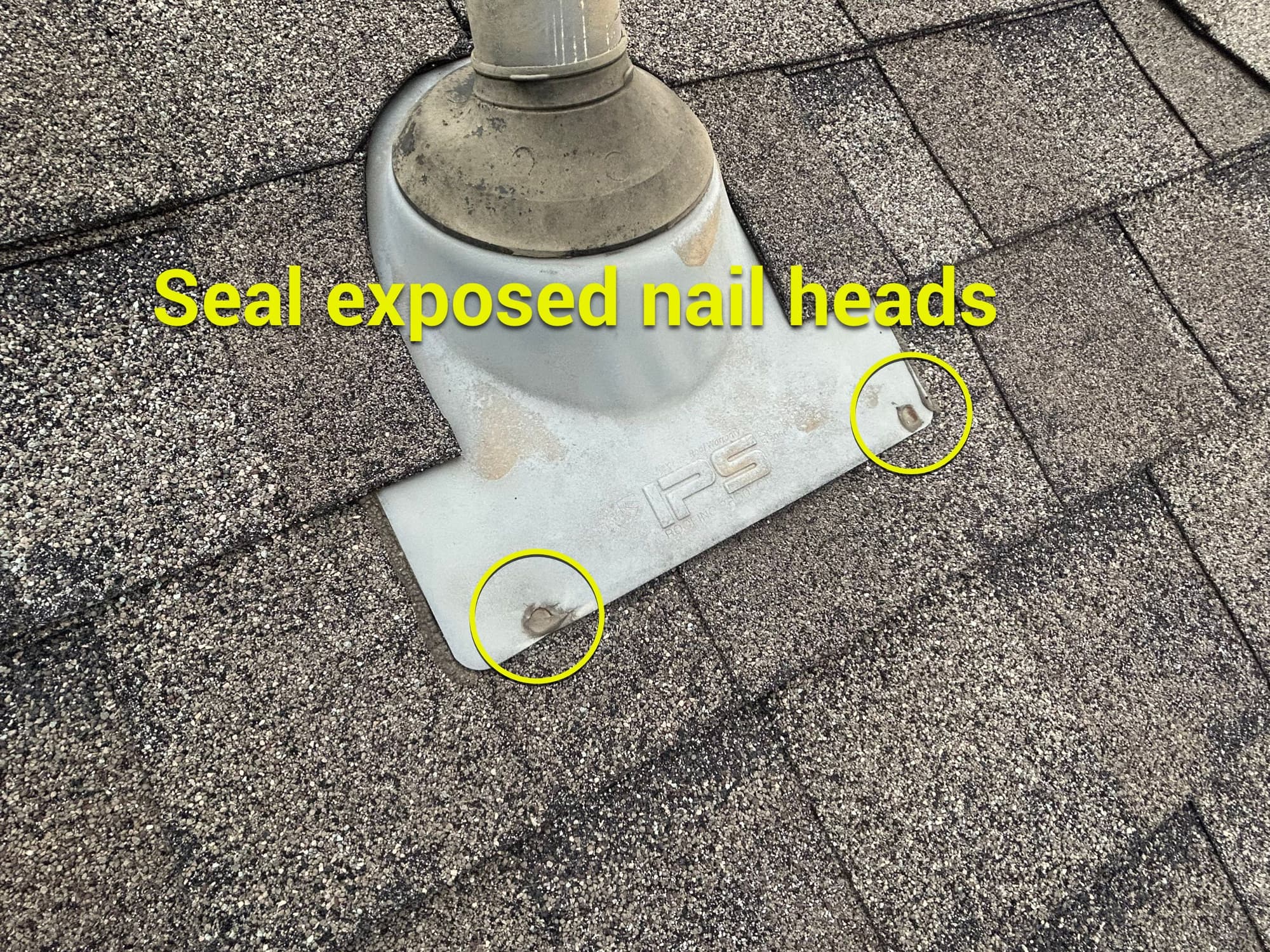
Exposed nail heads on flashing
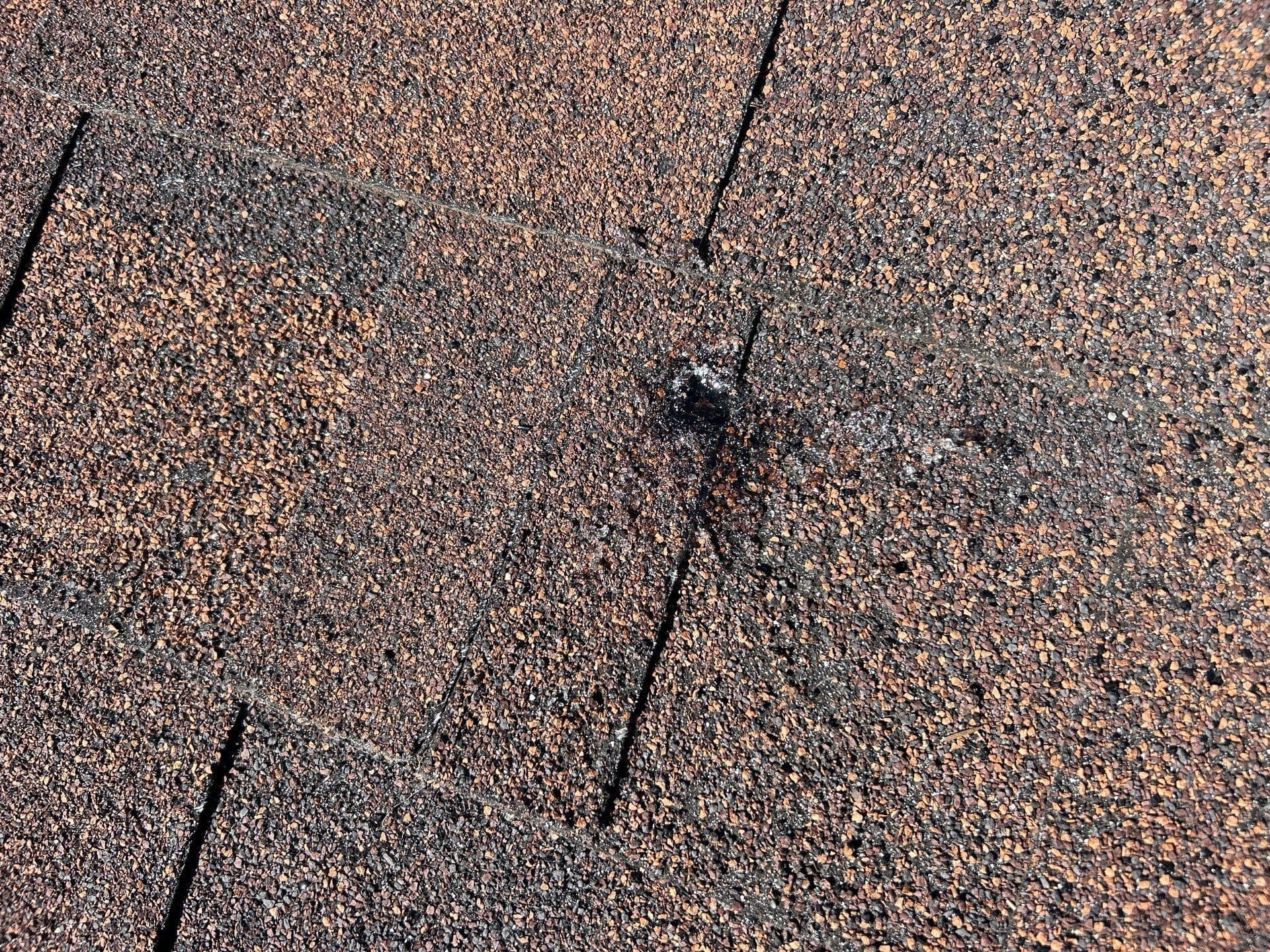
ObservedNail heads on pipe flashing, vent flashing or ridge caps left bare instead of sealed.
Usually meansTypically a slow, quiet entry point. It is the single most common issue we find, and usually a small fix if it is caught before the decking gets wet.
F-02
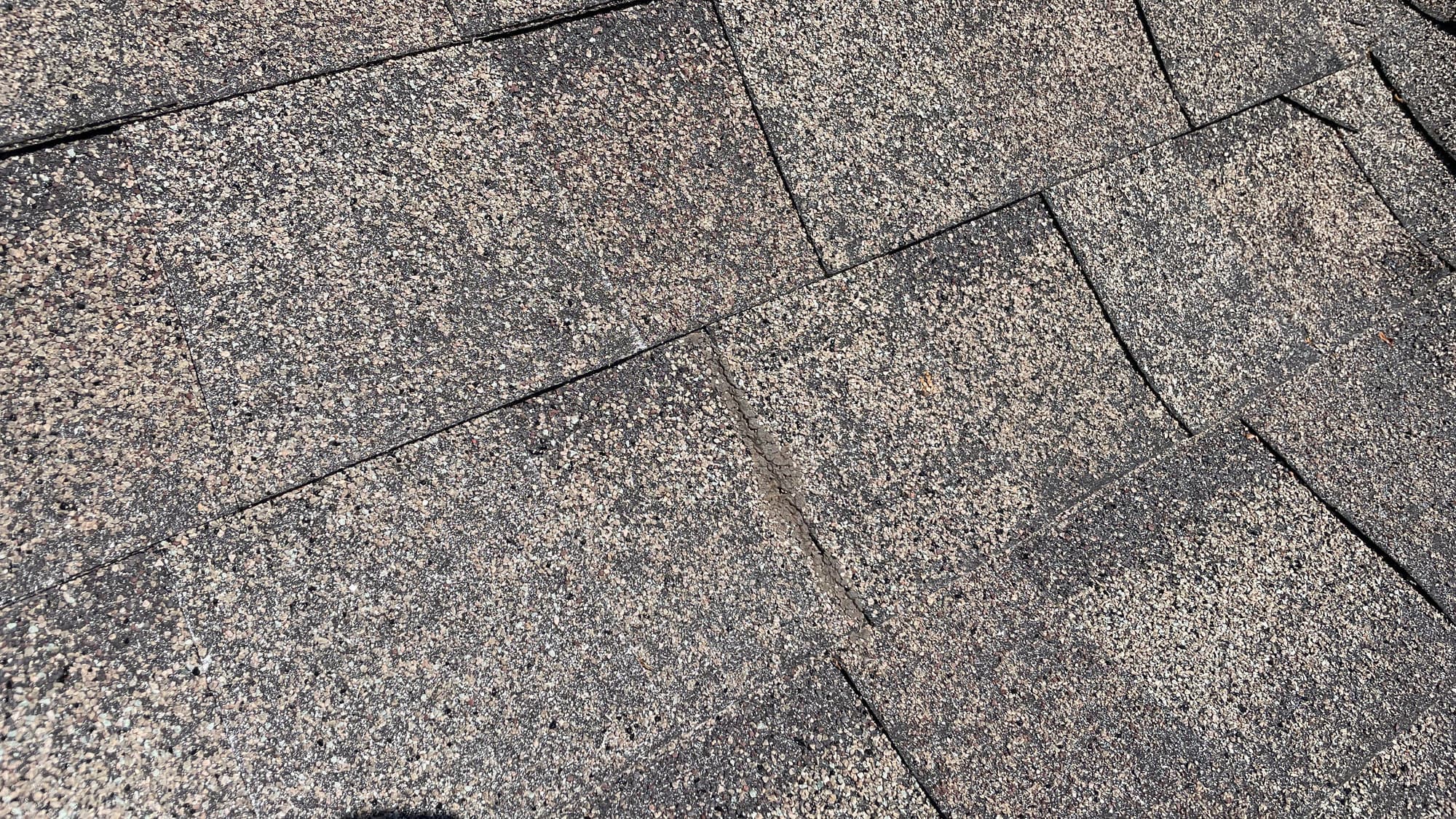
Lifted shingles and broken seal tabs
ObservedShingle edges that lift by hand or flutter in the wind, with a dull line where the adhesive strip has let go.
Usually meansUsually wind has broken the seal. Each storm after that tends to lift the shingle further until it creases, cracks or blows off.
F-03
Missing or creased shingles
ObservedBare spots, exposed underlayment, or a crease line running across a shingle.
Usually meansTypically wind or limb damage. Water has a more direct path to the decking, so this generally needs attention sooner rather than later.
F-04
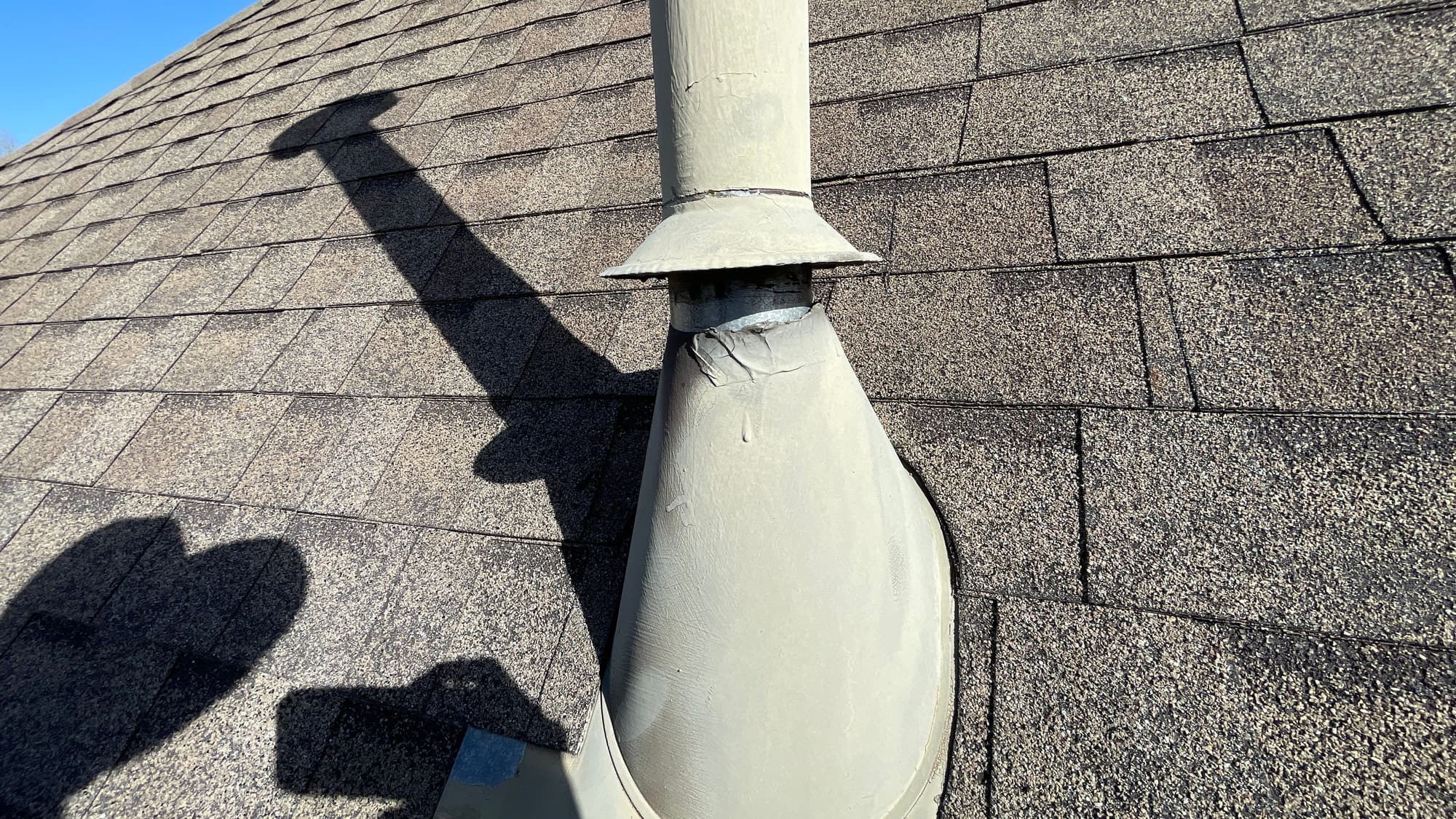
Cracked pipe boot
ObservedThe rubber collar around a plumbing vent is split, shrunken away from the pipe, or brittle to the touch.
Usually meansRubber dries out under sun and heat. A cracked boot commonly lets water run down the outside of the pipe into the attic.
F-05
Flashing gaps at walls and chimneys
ObservedStep or counter flashing pulled away, rusted through, missing, or held together only with caulk.
Usually meansOften the source of stains on interior walls near a chimney or below a second-story wall. The usual repair is new flashing, not another layer of caulk.
F-06
Soft decking
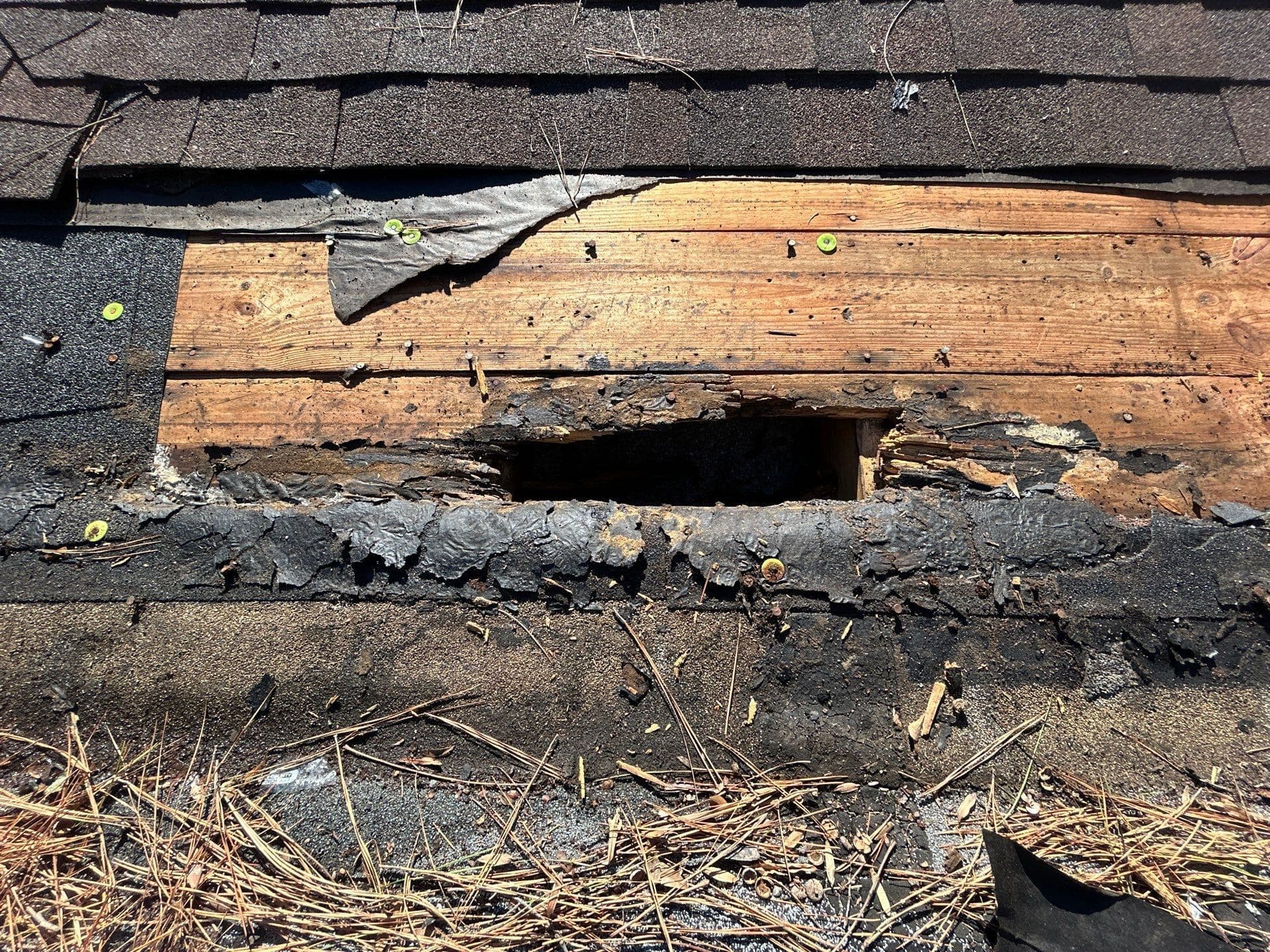
ObservedA spongy feel underfoot, a dip between rafters, or dark, wet wood when a shingle is lifted.
Usually meansUsually long-term moisture. The rotted section has to be cut out and replaced before new shingles go on, and the water source has to be fixed with it.
F-07
Nail pops
ObservedNails backing out of the decking and pushing up the shingle above them, or poking through it.
Usually meansCommonly linked to poor attic ventilation. It is a likely leak point and a sign the attic airflow deserves a closer look.
F-08
Rotted fascia or soffit
ObservedSoft or crumbling wood along the roof edge, peeling paint, or gaps where the drip edge meets the fascia.
Usually meansTypically water coming off the roof edge or overflowing gutters. New wood only lasts if the drainage problem is corrected at the same time.
Typical findings, explained in general terms. What your roof needs depends on what we find on it.
Repairs We Handle
Most repair calls involve one or more of these. Each is priced after we have seen it.
Shingle replacement
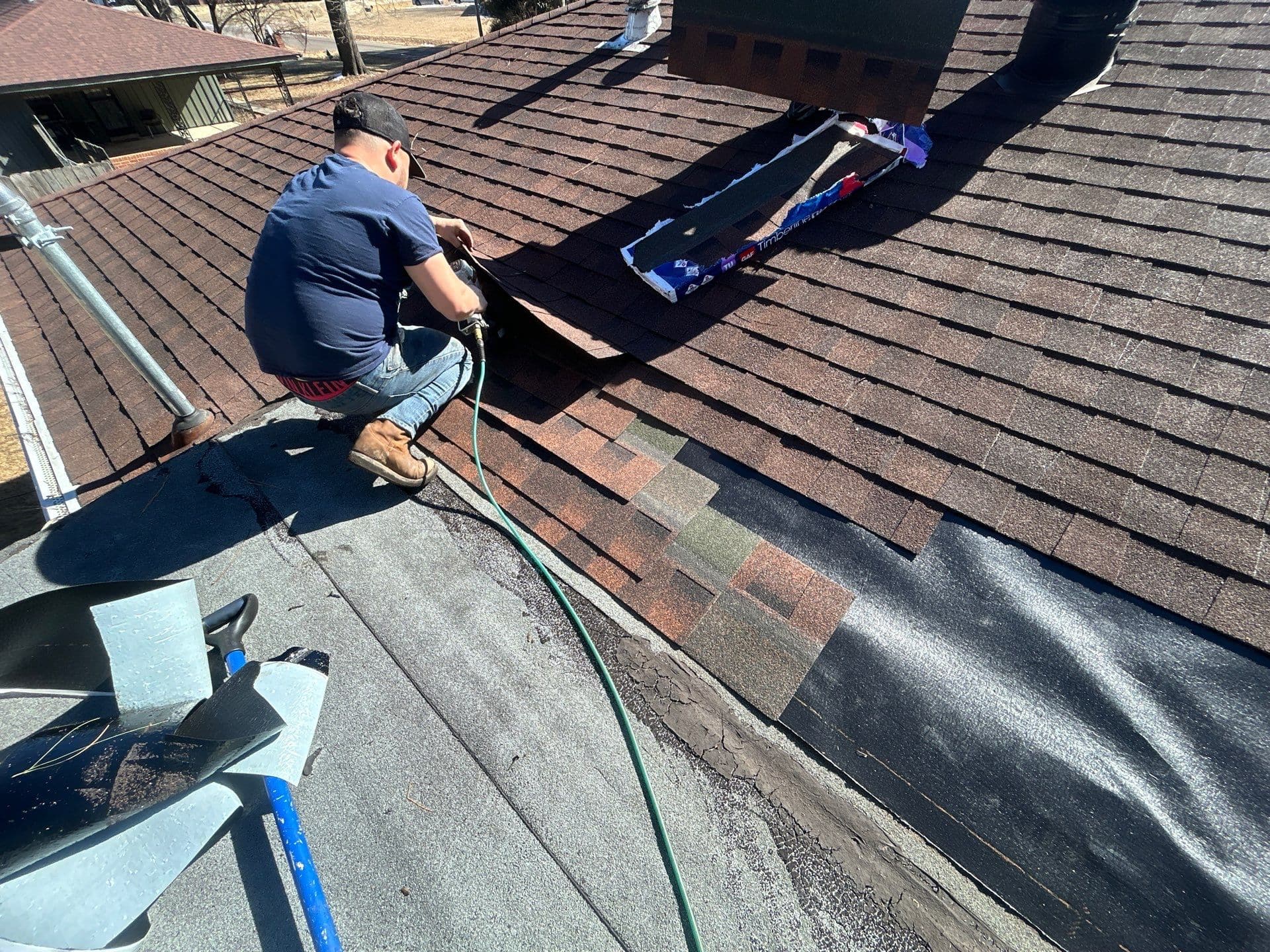
We remove damaged or missing shingles, check the underlayment and decking beneath for moisture, and work new shingles into the surrounding courses so they seal down and shed water the way the rest of the roof does.
Flashing repair
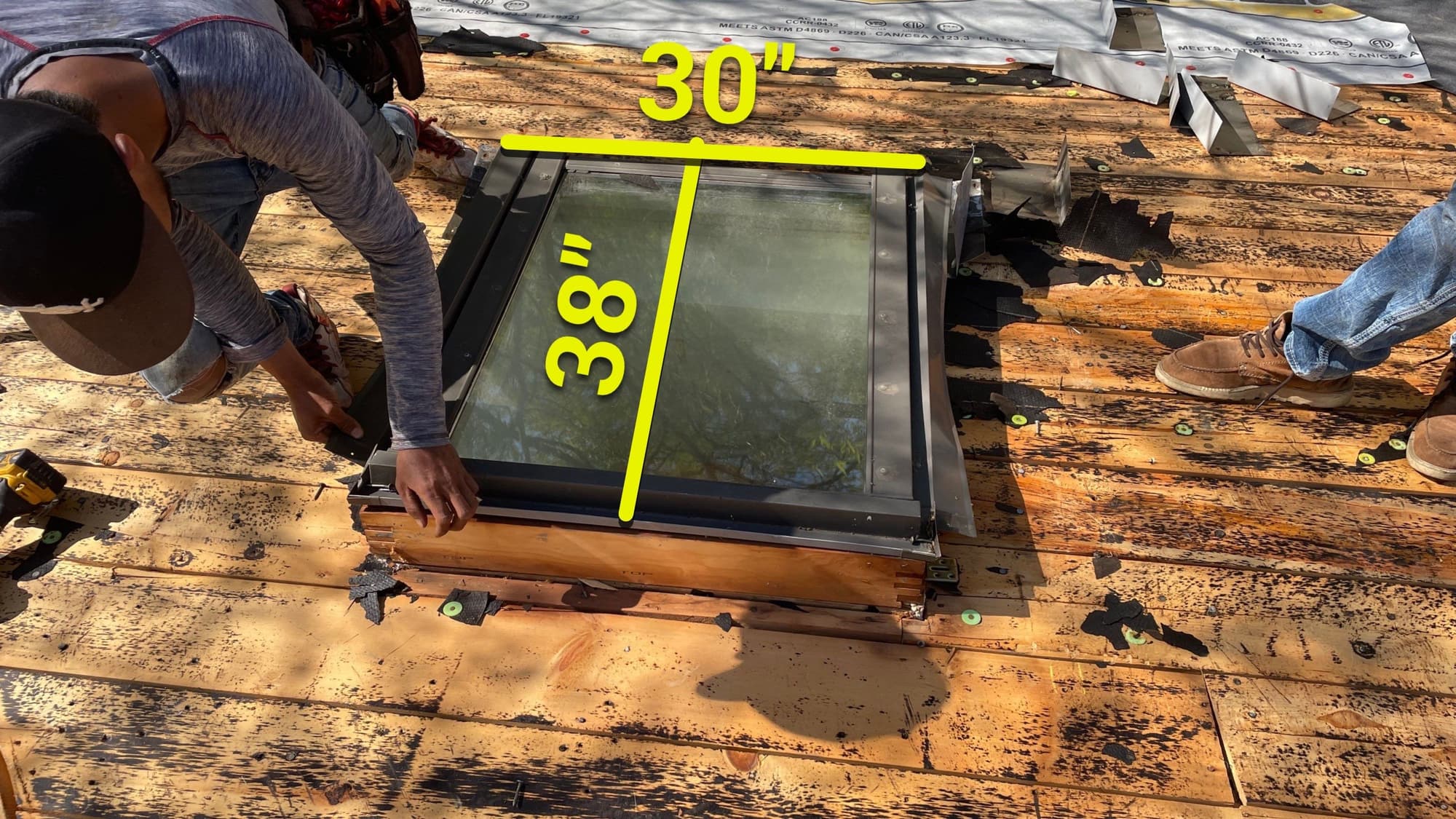
Flashing seals the joints where the roof meets chimneys, walls, vents and skylights. When it separates, corrodes or was installed poorly, we take it off, check the wood behind it and install new flashing rather than burying the problem in sealant.
Pipe boots and penetrations
Cracked vent boots, loose exhaust vents and old mounting holes from dishes or antennas are frequent leak sources. We replace or reseal them depending on what we find.
Sealing exposed nail heads
We seal exposed fasteners on flashings and ridge caps with roofing sealant. It takes time and never adds up to a big invoice, which is exactly why it so often gets skipped.
Decking repair
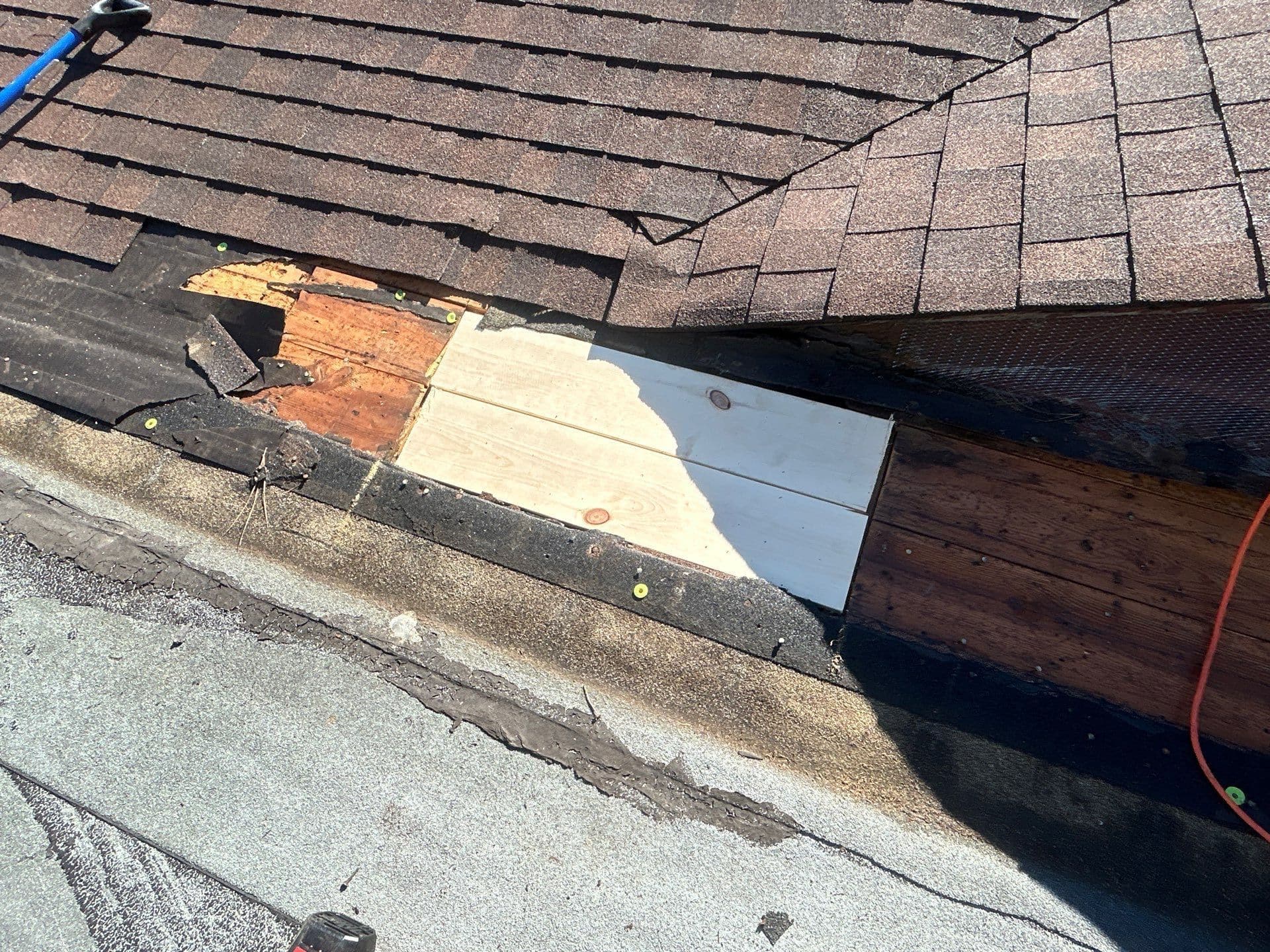
Rotted plywood or OSB is cut out and replaced with sound wood before the roof is closed back up. New shingles nailed over soft decking will not hold.
Fascia, soffit and trim
When water has rotted the wood along the roofline, we replace the damaged sections and find the roofing or drainage problem that caused it, so the new wood does not go the same way.
Storm damage and tarping
Wind, falling limbs and hail each damage a roof differently. Holes get covered first to keep the weather out, then we come back for the permanent repair.
“They specifically repaired and inspected everything on my roof along with some wood repair on the underside. They were great at communicating and everything was so easy! I've worked with a lot of different "house repair" people and it's far too common for that field to lose my trust because of ghosting or poor work.”
04The honest line
Repair or Replace?
Many of the roofs we are called to can be repaired. Some cannot. These are the signs we weigh before recommending either.
A localized problem
When a repair makes sense
- The damage is confined to one area, such as a single slope, a vent or a chimney.
- The surrounding shingles are still flexible and holding their granules.
- The decking is solid outside the damaged spot.
- The leak traces to a specific failure, like a cracked boot, a flashing gap or a few missing shingles.
- The roof has useful years left, and fixing the trouble spots costs far less than replacing it.
Widespread deterioration
When replacement is the safer call
- Shingles are brittle, curling or cracking across much of the roof.
- Heavy granule loss shows on many slopes, not just one.
- Soft decking turns up in several places.
- Flashing failures are systemic rather than isolated.
- Repairs keep stacking up, each one treating a symptom of a roof that is wearing out.
When the answer is replacement, we explain why with the photos in front of you, and we can price both so you can plan. When a repair will buy you useful time, we say that just as plainly.
Repairs from real jobs
See our recent projects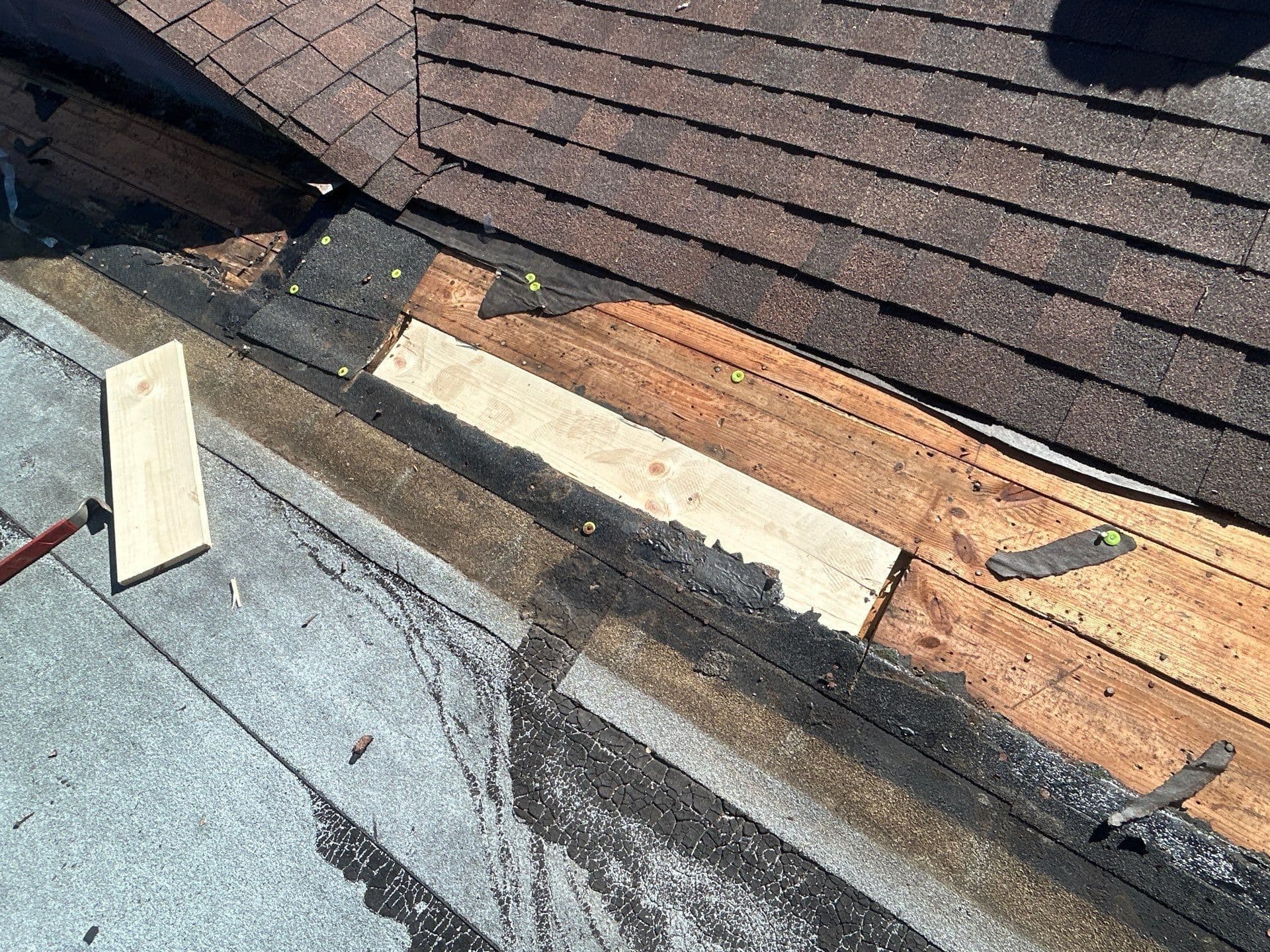
How a Repair Visit Goes
- 01
You tell us what you are seeing
A stain, a drip, a shingle in the yard, daylight in the attic. Where and when it shows up tells us where to start.
- 02
We get on the roof
When it is safe, we walk the roof and trace the problem from the outside in, checking the penetrations, valleys and flashing on the slopes above and around the stain.
- 03
We photograph the cause
You see what we saw: the failed boot, the gap behind the flashing, the lifted shingles. If we spot other issues worth knowing about, we photograph those too and tell you which can wait.
- 04
You get a straight price
We explain the fix and what it costs before anything is scheduled. If replacement is the more honest answer, we explain why.
- 05
We make the repair
Someone from our team is on site whenever work is being done. Damaged material comes off, the wood beneath is checked, and the repair is built back properly.
- 06
You get photos of the finished work
Pictures of the completed repair come to you, so you have a record of what was done and where.
After a Storm: Tarp First, Then a Real Repair
A limb through the roof or a run of shingles torn off in high wind changes the order of things. The first job is keeping water out of the house. When a leak is active we tarp it as quickly as we can, often the same day, then come back for the permanent repair once materials and weather allow.
We also document what the storm did. If the damage looks like it may be worth an insurance claim, our photos and written findings give you something concrete to take to your insurer, and we can meet the adjuster on site. We will not promise that a claim will be approved, and we will not inflate the damage. If a storm left a few damaged shingles on an otherwise sound roof, the honest answer is a repair, and that is what we will tell you.
Google reviews
In Our Customers' Words
“I was worried it was going to turn into a much bigger job, but after checking everything they found the issue was coming from a damaged section of shingles and flashing. They explained what they were seeing and got the repair taken care of without trying to sell me on work I didn't need. Everything was cleaned up when they finished, and we've had a few good rains since with no more water coming in.”
“Brett & George came out to inspect some water spots in my ceiling. Identified two areas of concern after walking the roof. Numbers were comparable to the other quote I got. Communication, response time, and knowledge is what sold me on using them. Repair looks seamless with existing roof and new skylight looks great.”
Questions
Roof Repair Questions, Answered
Payment, scheduling and insurance questions live on our main FAQ page.
Is there roof repair near me in Collierville, Germantown or Memphis?
Yes. Our office and crews are based at 761 Chaney Drive in Collierville, so Germantown, Cordova and most of Memphis are a short drive away, and we also cover Bartlett, Lakeland, Arlington, Eads and the surrounding counties. Call (901) 300-3939 or book a free assessment online. When a leak is active, we tarp it as quickly as we can, often the same day, and schedule the permanent repair once we have found where the water is getting in.
How do you find where my roof is leaking?
We find it from the roof, not the ceiling. Water often travels along the decking or a rafter before it shows inside, so the stain can be several feet from the entry point. We check every penetration, valley, wall joint and chimney on the slopes above and around the stain, then photograph the cause once we find it. Most leaks we trace come from flashing or a penetration such as a pipe boot rather than the open shingle surface.
Will the new shingles match the rest of my roof?
We match as closely as we can, but a perfect match on a weathered roof is unlikely. Shingles fade and lose granules over years of sun, so new ones usually look a little different from those around them, even in the same color name. The difference is cosmetic. The repair is built to shed water like the rest of the roof. If appearance on a front-facing slope matters a lot to you, tell us and we will talk through the options.
What is the difference between a tarp and a permanent repair?
A tarp is temporary protection; it keeps rain out while the real fix is arranged. When a leak is active, we cover the opening as quickly as we can, often the same day you call. The permanent repair comes after, once we have traced the full extent of the damage, checked the decking and lined up the right materials. Please do not climb onto a wet or damaged roof yourself to cover it.
How much does a roof repair cost?
It depends on what failed, how much wood is damaged underneath, the pitch of the roof and the materials involved, so we do not publish a flat price. Resealing a flashing and replacing a section of rotted decking are very different jobs. After the free assessment you get the photos and a written price for the specific repair before anything is scheduled. Financing through Hearth is available on qualifying projects.
Will you repair a roof another company installed?
Yes. We work on roofs no matter who installed them, and some of our repair calls involve correcting a detail that was put in wrong, such as a ridge vent or a piece of flashing. We show you what we found and explain what it would take to fix it. If the roof is fairly new, check the original installer's paperwork first, since work by another company may affect any workmanship warranty they gave you.
Is it worth repairing a roof that is 15 or more years old?
Sometimes. Condition decides it more than age. A roof in its later years with flexible shingles and one failed flashing is a good repair candidate. A roof of the same age with brittle shingles and granule loss on every slope usually is not, because the repairs will keep coming. In the Mid-South we generally see three-tab roofs last about 16 to 18 years and architectural roofs about 18 to 22. We will tell you where yours stands.
Free roof assessment
Tell Us Where the Water Is Showing Up
We will get on the roof, trace the leak to its source and show you the photos before we quote a repair. Call (901) 300-3939 or request a free assessment.