

Why the Order Matters
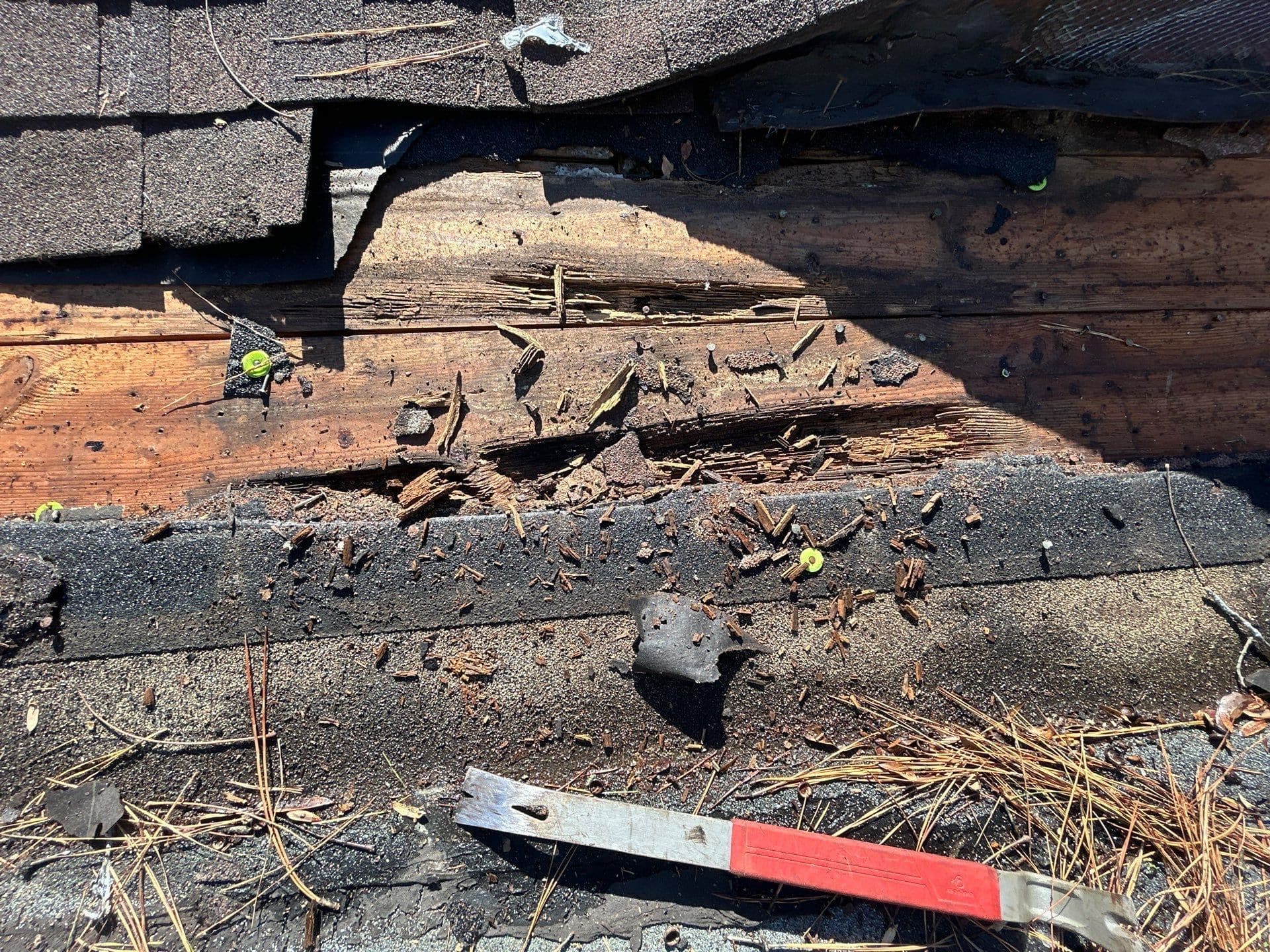
A bad storm does not stop at the roof. Wind drives water through a damaged section, it soaks into insulation and drywall, and by the next morning there may be a stained ceiling, wet carpet and swollen baseboards.
The instinct is to fix what you can see as fast as possible. That is the step to resist. Drywall hung over a framing cavity that has not fully dried, or a ceiling closed up while the roof above it still leaks, simply moves the problem out of sight. Each stage has to be finished before the next one starts.
The Sequence, Step by Step
- 01
Make it safe and document it
Keep people away from sagging ceilings and wet electrical areas. Then photograph or video every bit of damage, inside and out, before anything is moved. The Tennessee Department of Commerce and Insurance (TDCI) recommends this documentation for any claim.
- 02
Contact your insurer promptly
TDCI advises filing as soon as possible because your policy may require notice within a set time frame. Keep notes of who you spoke with, when and what was said.
- 03
Stop the water
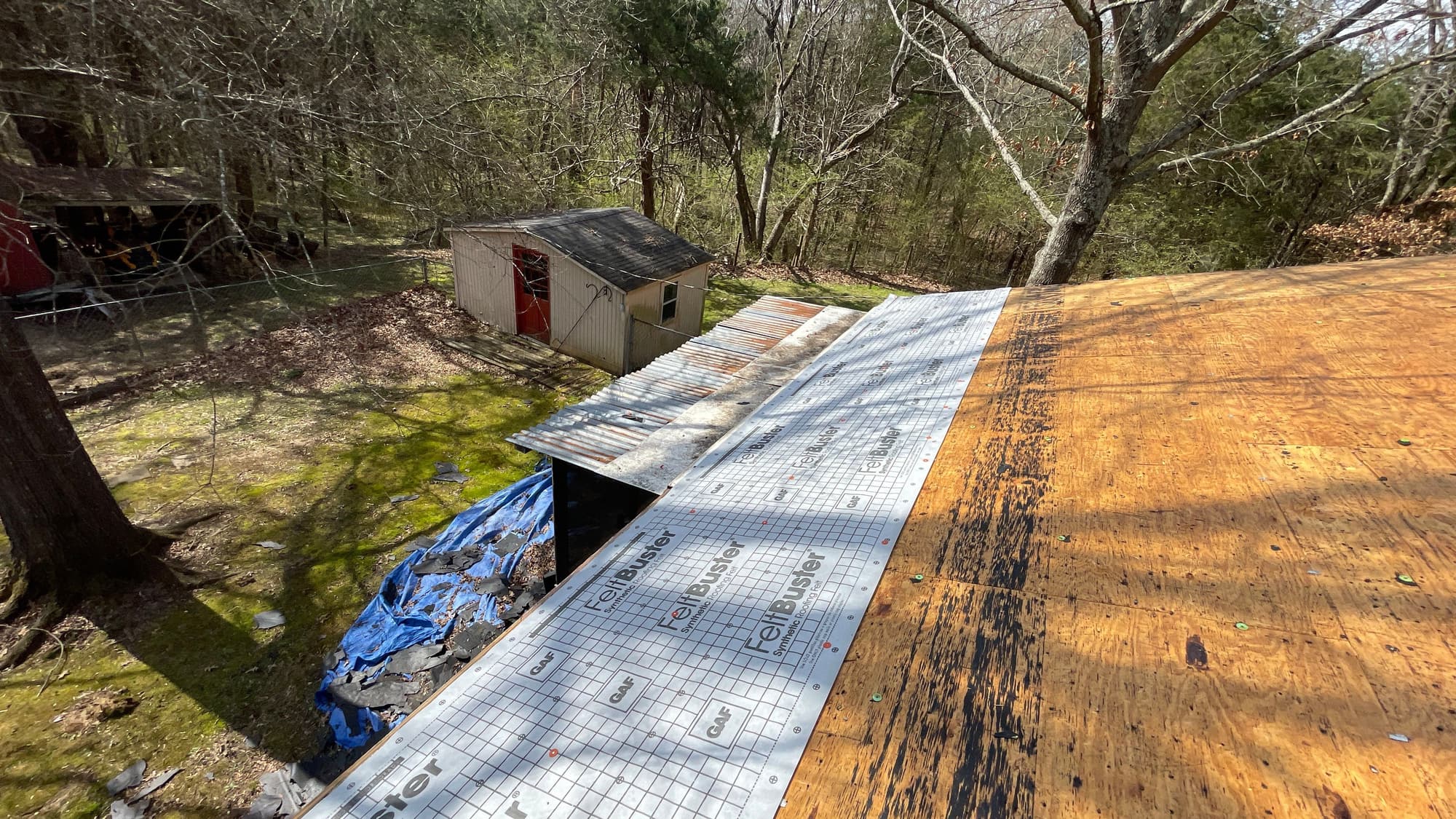
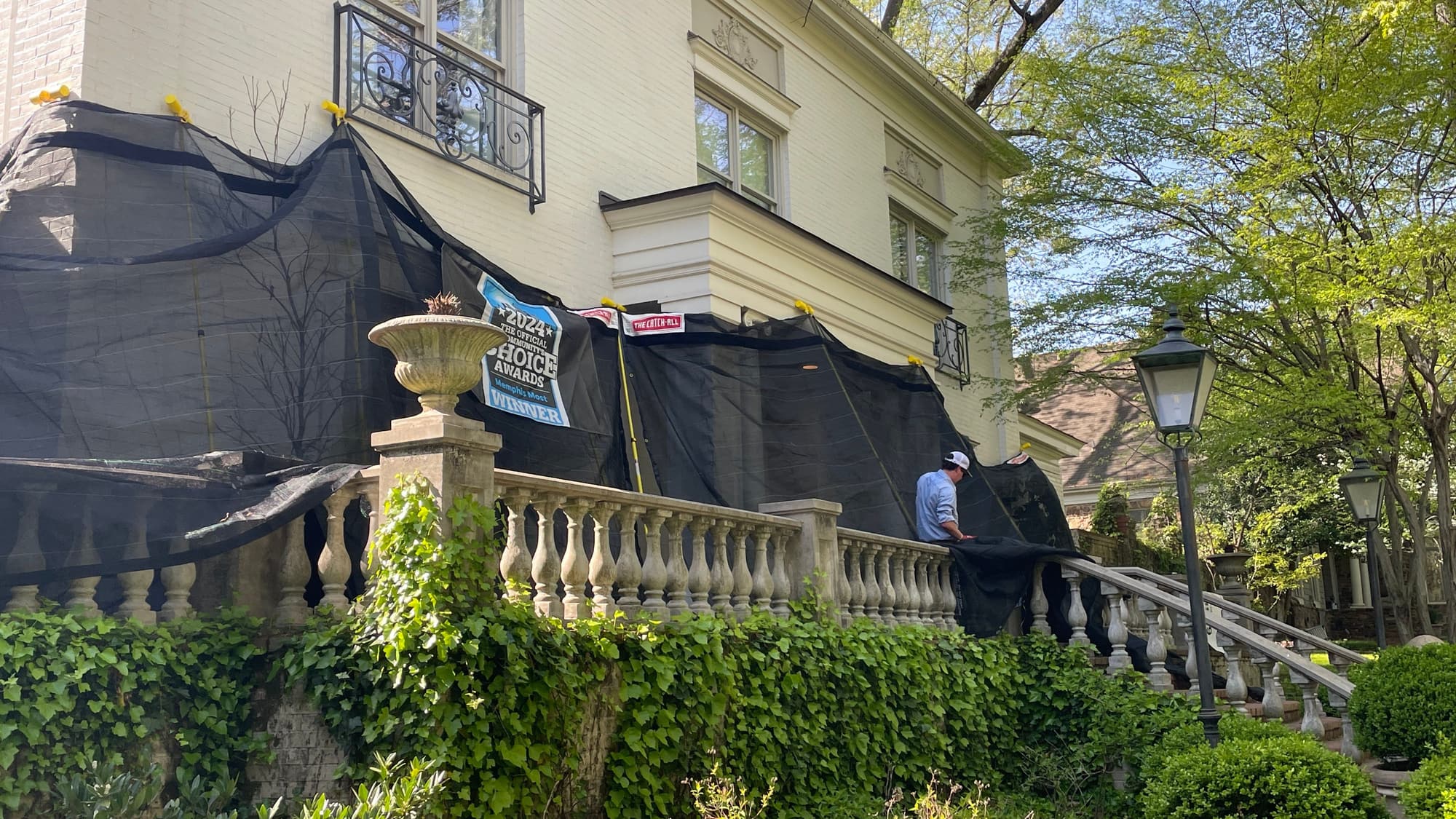
If the leak is active, the opening gets tarped or temporarily repaired. When a leak is active we tarp it as quickly as we can, often the same day. TDCI advises making the repairs needed to prevent further damage, but holding off on permanent repairs until your insurer has inspected and you have agreed on costs.
- 04
Mitigation dries the structure
A professional mitigation company extracts standing water, runs drying equipment, typically for three to seven days depending on how wet things are, removes materials that cannot be saved, and contains and remediates any mold. They document moisture readings for the adjuster.
- 05
The roof is permanently repaired or replaced
Once your insurer has inspected, if a claim is involved, the permanent roof repair or replacement is scheduled so the source of the water is fixed for good.
- 06
The mitigation report clears
The structure is confirmed dry and clean before anything is closed back up.
- 07
The interior is rebuilt
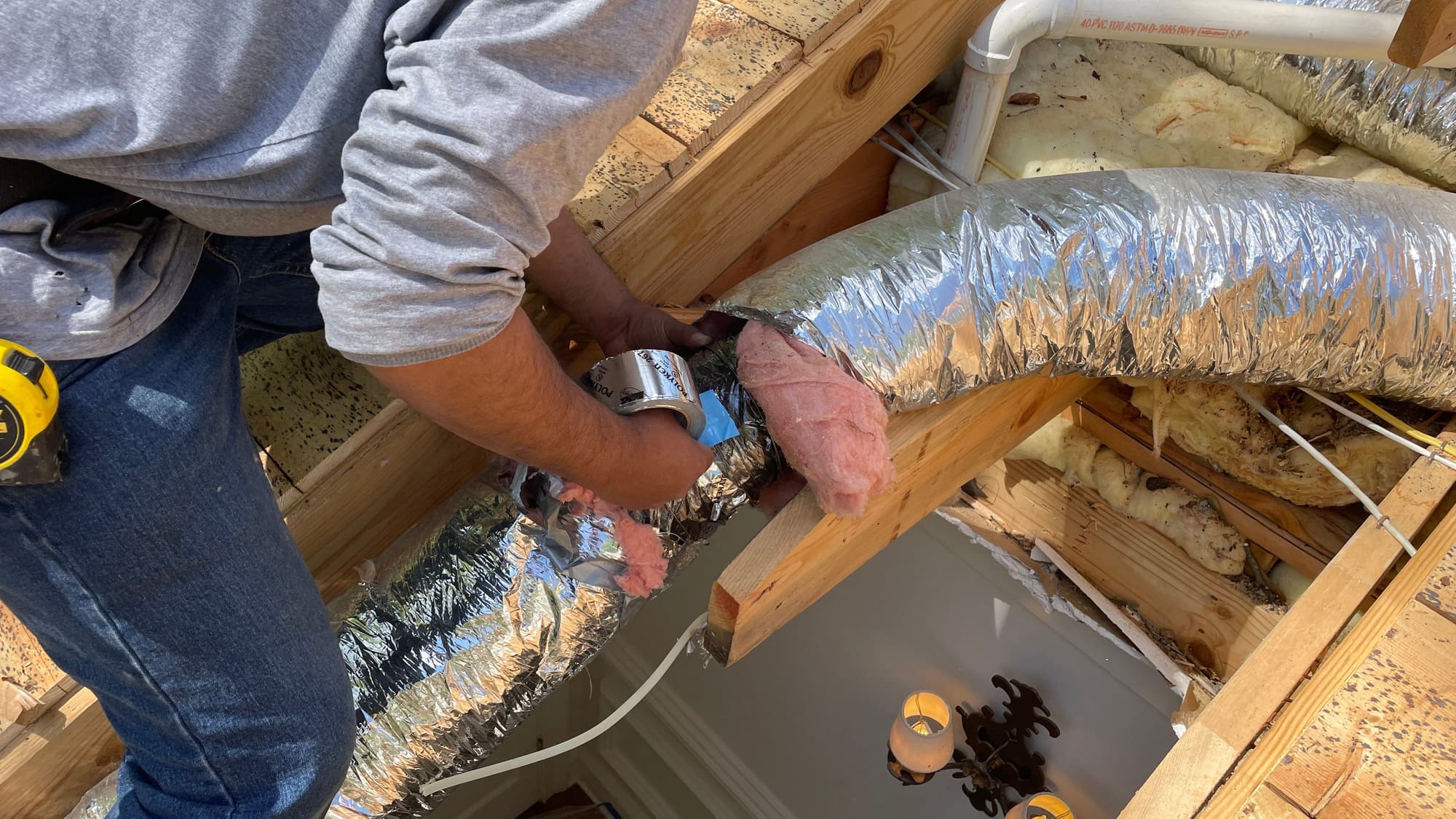
Drywall goes back up, ceilings are retextured to match the rest of the house, trim and baseboards are replaced, walls are primed and painted, and flooring is installed.
- 08
Final walkthrough
We walk the finished rooms with you. The goal is that you cannot tell anything happened.
Who Does What
Option 1
Reborn Roofing
- Tarping and temporary roof protection
- Permanent roof repair or replacement
- Interior rebuild: drywall, ceilings, texture, trim, paint, flooring
- Line-item rebuild estimates written the way adjusters expect
- Meeting your adjuster on site when it helps
Option 2
Professional mitigation company
- Water extraction and structural drying
- Removal of materials that cannot be saved
- Mold containment and remediation
- Moisture documentation for the claim
Option 3
Your insurance company
- Inspects the damage through an adjuster
- Decides what the policy covers
- Issues payment under the terms of your policy
Reborn does not do water extraction, drying, mold remediation or fire mitigation. Those are separate trades with their own training and equipment, and we work alongside professional mitigation companies rather than doing that work ourselves.
What Insurance Usually Covers, and What It Often Does Not
According to TDCI, damage caused by wind, wind-driven rain, trees and other falling objects is covered under most standard homeowners policies. TDCI also lists what is typically not covered: interior water damage from a storm when there is no damage to the roof or walls, flood damage, removal of fallen trees that did not land on the house, and water from backed-up drains or sewers.
That first exclusion is worth reading twice. Whether water came in through storm damage to the roof or through some other route can matter to a claim, which is one more reason to document the roof promptly. Every policy is different, so check yours or ask your agent. And if a claim is denied and you believe it should not have been, TDCI offers a mediation process for policies written in Tennessee.
Before You Sign With Anyone After a Storm
These points come from TDCI's published guidance for Tennessee homeowners after storms.
Be wary of door-to-door offers
TDCI specifically warns about contractors soliciting storm repairs door to door or by phone.
Check the license
Look up any contractor's license status at verify.tn.gov.
Ask who does the work
Find out whether the contractor's own employees will do the job or whether it is subcontracted.
Keep the deposit in bounds
State law limits deposits on home improvement projects to no more than one-third of the contract price.
Take your time
Do not let anyone pressure you to sign on the spot or before you have read the contract.
Ask for references and proof
References, licenses, permits, insurance and bonding are all fair things to request.