

Water Follows the Wood, Not Your Floor Plan
A roof is built in layers: shingles on top, underlayment beneath them, then the wood decking, held up by rafters or trusses. When water gets past the shingles, it does not fall straight through. It clings to the surfaces it touches and runs downhill along them.
So a drip that starts at a pipe boot near the ridge may run down the underside of the decking, follow a rafter, cross the top of a wall and finally collect on the drywall in the middle of the next room. The stain marks where the water stopped traveling, not where it started.
This is why patching the shingles directly above a stain so often fails. The real opening is somewhere upslope, still letting water in.
Where Leaks Usually Start
Most leaks we investigate trace back to a flashing or penetration, not to the open field of shingles.
Pipe boots
Dried, split gaskets around plumbing vents let water run straight down the pipe.
Chimney flashing
Separated step or counter flashing, or water and debris backing up behind a wide chimney.
Walls and dormers
Step flashing that has pulled away where a slope meets siding.
Valleys
The heaviest water flow on the roof, often made worse by trapped leaves.
Exposed nail heads
Unsealed fasteners on flashing, each one a small but steady opening.
Vents, skylights and mounts
Exhaust vents, skylight flashing and satellite dish mounts are all penetrations that can fail.
Why the Stain Shows Up Late
A few drops of water per minute can come through a roof for a long time before you see anything. Insulation soaks it up first. Then the drywall absorbs it slowly. Some leaks take weeks or months to show as a stain.
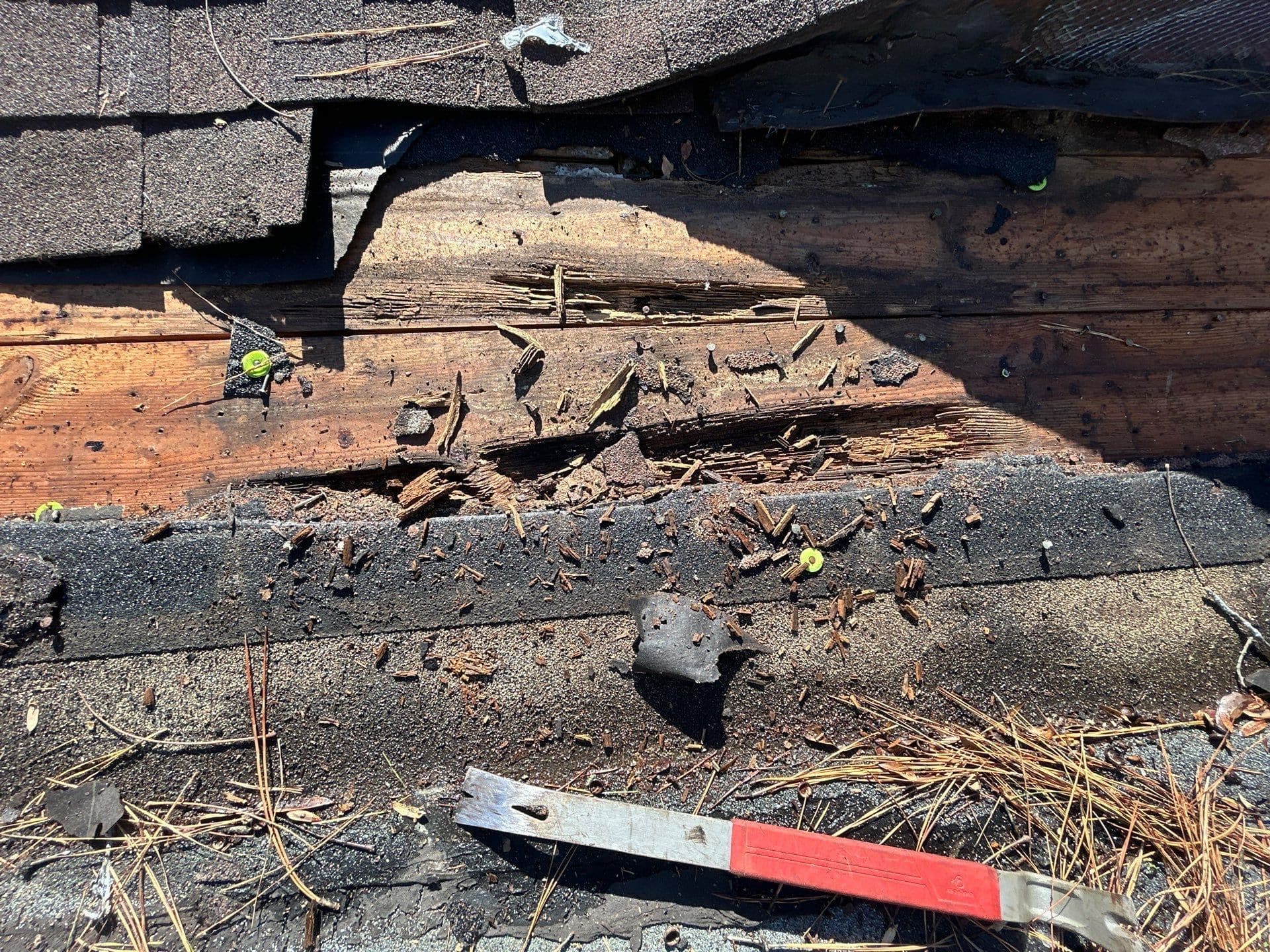
That delay matters for two reasons. The leak is older than it looks, so the decking and framing around it may already be damaged. And by the time a stain appears after a particular storm, the opening may have been there for many rains before it.
How We Trace a Leak
- 01
Start from the clue
We note where the stain is inside and, if we can reach the attic, look for wet decking, darkened wood or drip marks above it.
- 02
Work upslope on the roof
From the outside, we check every penetration, valley, wall joint and transition uphill from the stain, not just the spot directly above it.
- 03
Check the usual suspects closely
Pipe boots, flashing nail heads, step flashing and valley debris get a close look, because that is where most entry points are.
- 04
Photograph the entry point
When we find it, we photograph it and show you, so you can see the cause rather than take our word for it.
- 05
Give you a straight repair price
You get the fix for the cause, plus anything the water has already damaged, such as soft decking.
What You Can Note Before We Arrive
When it leaks
Every rain, only heavy rain, or only wind-driven rain from one direction. Wind-only leaks often point to flashing on that side of the house.
How fast it appears
A stain that shows during the storm suggests a larger opening. One that appears days later suggests a slow path.
Photos over time
A picture after each rain shows whether the stain is growing.
Anything recently done on the roof
A new satellite dish, HVAC work or other trades on the roof are worth mentioning.
Is It Even the Roof?
Not every ceiling stain comes from above. A slow plumbing leak from an upstairs bathroom, a clogged condensate line from an attic air handler, or a bathroom fan venting warm, damp air into the attic instead of outdoors can all leave marks that look like a roof leak.
A few clues help sort it out. A stain that only grows during or after rain points to the roof. One that grows on dry days, or sits below a bathroom or near the HVAC unit, may not. If we trace a stain and the roof is not the cause, we will tell you, and you will have saved yourself a roof repair you did not need.
When the Leak Has Been There a While
Long-running leaks leave damage behind. Decking that has stayed wet turns soft and cannot hold nails, so we cut out the compromised section and install sound wood before closing the roof back up. Water running off the roof edge can also rot fascia, soffit and trim; we replace the rotted wood and fix the roofing or drainage problem that caused it, rather than painting over it.
If you have a leak right now, call. When a leak is active we tarp it as quickly as we can, often the same day, and then schedule the permanent repair.