

Why We Do Not Price by the Size of Your House
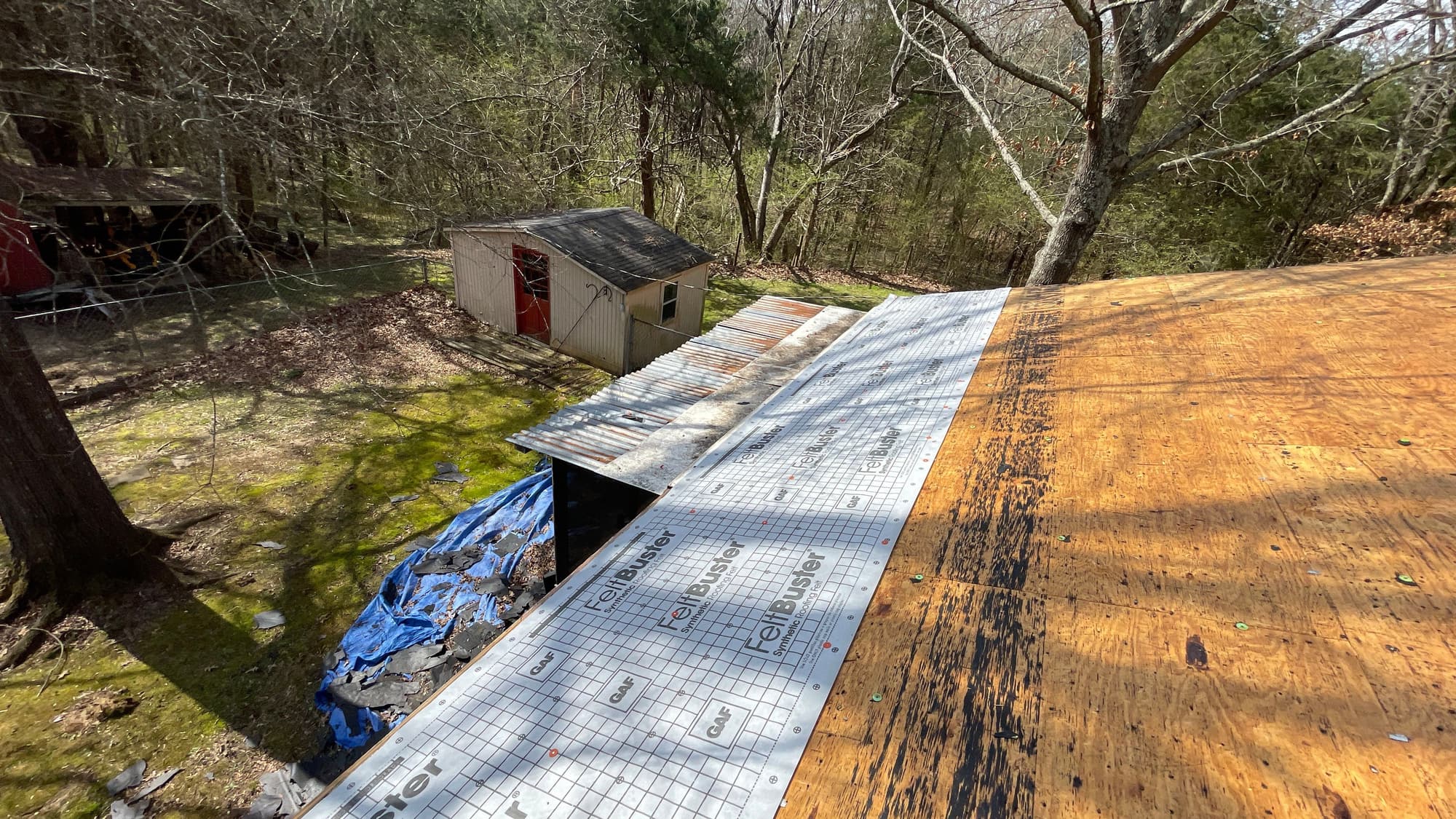
Homeowners often assume their roof is about the same size as their home's square footage. It rarely is. A two-car garage usually is not counted in the home's heated square footage, but it still has a roof. Covered porches and overhangs add more. And pitch adds surface: a steep roof covers far more area than its footprint on the ground.
That is why roofing contractors quote by the square, the standard unit of 100 square feet of roof surface, rather than by the size of the house. Two homes with the same square footage can need very different amounts of roofing.
Home Square Footage vs. Roof Area
What the listing says
Home square footage
- Heated, livable floor area
- Usually leaves out the garage and porches
- Ignores overhangs at the eaves and rakes
- Measured flat, with no allowance for slope
What gets shingled
Roof area
- Every surface that gets covered, garage included
- Overhangs and porch roofs included
- Measured along the slope, so pitch adds area
- Expressed in squares of 100 square feet
The Pieces That Make Up the Number
- 01
Roof area
The measured surface in squares. This is the base the rest of the estimate is built on.
- 02
Pitch
Steeper slopes add surface area, take longer to work safely, and need more safety equipment and staging.
- 03
Complexity
Valleys, hips, dormers, chimneys and skylights each mean more cutting, more flashing and more labor than a simple two-slope roof.
- 04
Waste allowance
Shingles get cut to fit at every hip, valley and edge, so the order includes more material than the bare surface area.
- 05
Shingle line
Three-tab, architectural and designer shingles differ in cost. We recommend architectural shingles for most homes; the price difference over three-tab is small and the long-term value is real.
- 06
Accessories
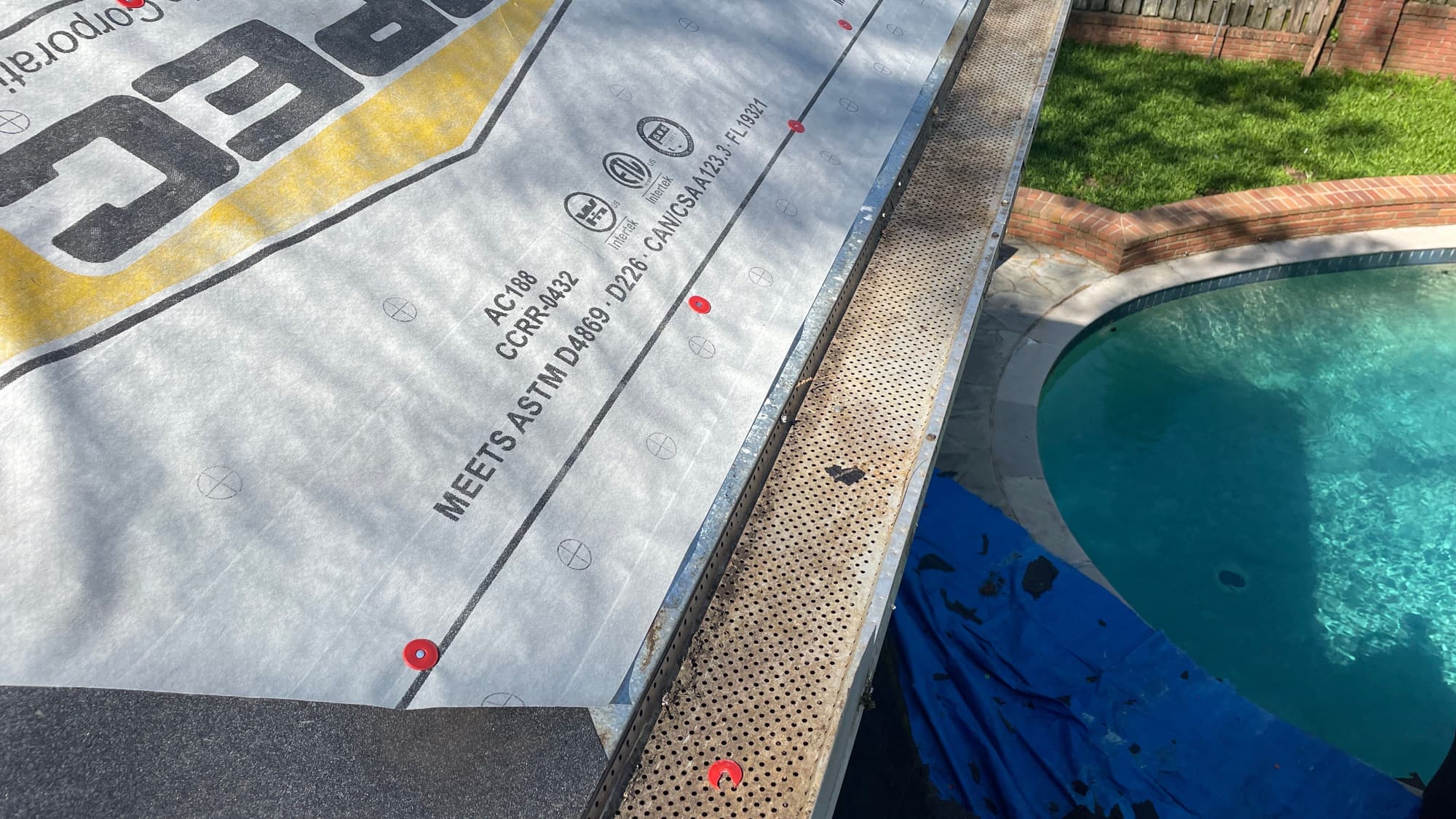
Underlayment, leak barrier in valleys, drip edge, starter strip, ridge cap, pipe boots, step and valley flashing, and ventilation components.
- 07
Tear-off and disposal
Removing the old roof down to the deck and hauling it away. A second layer of old shingles adds to this.
- 08
Decking
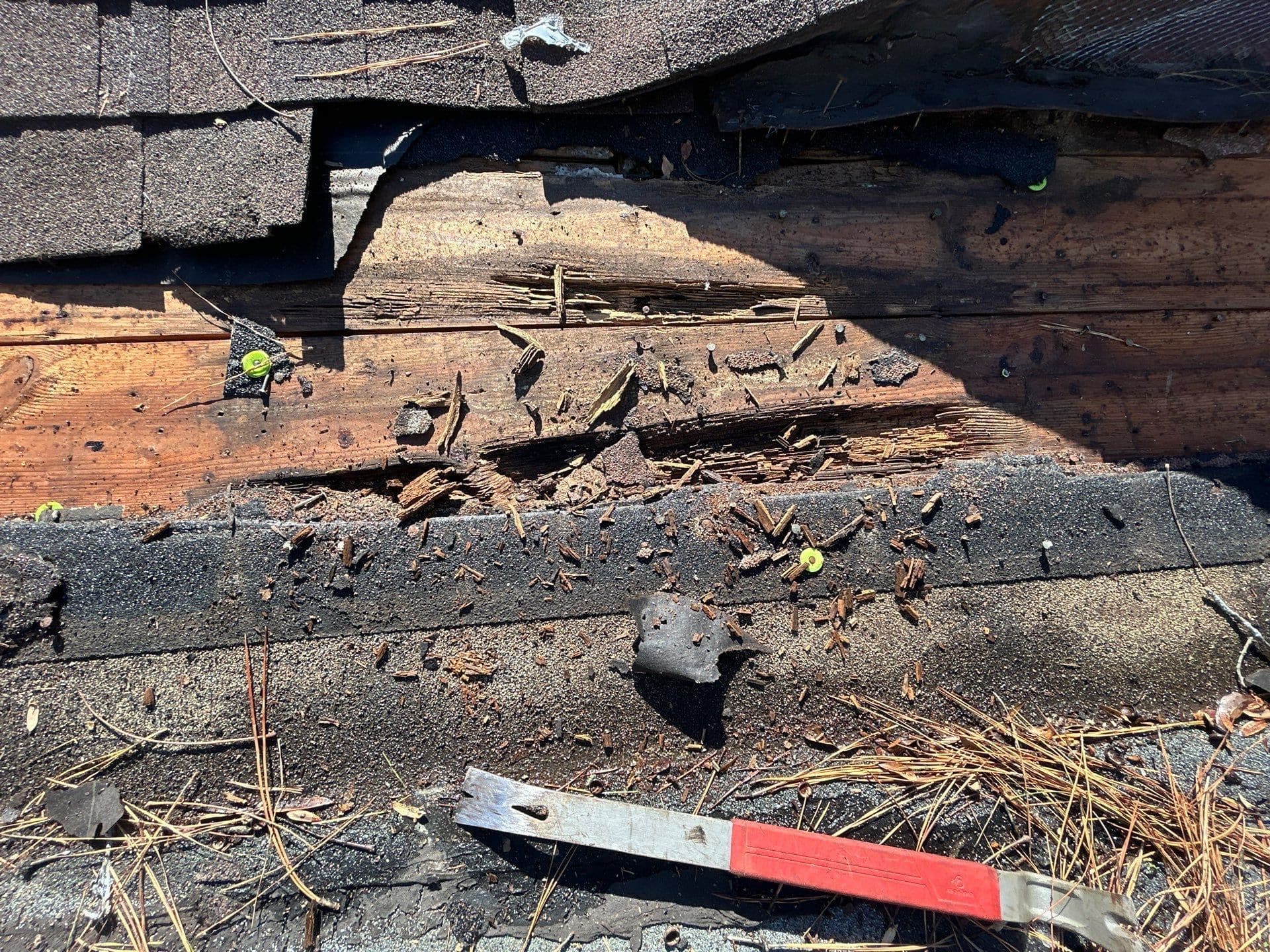
Rotted or damaged boards found after tear-off have to be replaced before anything goes back on. Nobody can see all of the deck in advance, so a good estimate explains how this will be handled.
- 09
Ventilation corrections
If the attic needs more intake or a ridge vent, that work belongs in the estimate.
How We Build Your Estimate
- 01
Inspect on the roof
When it is safe, we walk the roof and look for every detail that needs to be in the price: chimney flashing, soft spots, number of layers, ventilation, pipe boots.
- 02
Order a roof measurement report
A measurement report gives us accurate areas, pitches and edge lengths, so the quantities are not guesses.
- 03
Build the line items
Materials, labor, tear-off, disposal and accessories, with how damaged decking will be handled.
- 04
Walk you through it
You see what is going on the roof, why we chose it and what warranty coverage comes with those materials. You approve it online or on paper.
What Can Change Once the Old Roof Is Off
A few things can only be confirmed after tear-off. The most common is decking: boards that looked sound from above can be soft or delaminated underneath, especially around old leaks, chimneys and valleys. Less often, a hidden second layer of shingles or damaged flashing under the old roof turns up.
What should not change is everything that was visible and measured beforehand: the roof area, the shingle line, the accessories and the labor to install them. If a contractor's price moves on those, ask why. On our jobs, a team member is on site throughout, so if we find something that affects the scope, you hear about it from a person, with photos, before the work goes further.
How Payment Works
Projects under $5,000 are paid in full on completion and your satisfaction. Projects of $5,000 or more need a 30% deposit, with the balance due on completion and your satisfaction.
If the replacement is part of an insurance claim, your initial actual cash value payment plus your deductible serves as the deposit. We submit the paperwork to your insurer to release the depreciation payment, and we collect the balance when it arrives. The deductible is always yours to pay.
Financing is available on qualifying projects through Hearth's network of lending partners. Hearth is not a lender, financing is subject to credit approval, terms vary by lender, and checking your options does not affect your credit score. If you finance, we collect payment from the lender when the work is finished and you have signed off.