

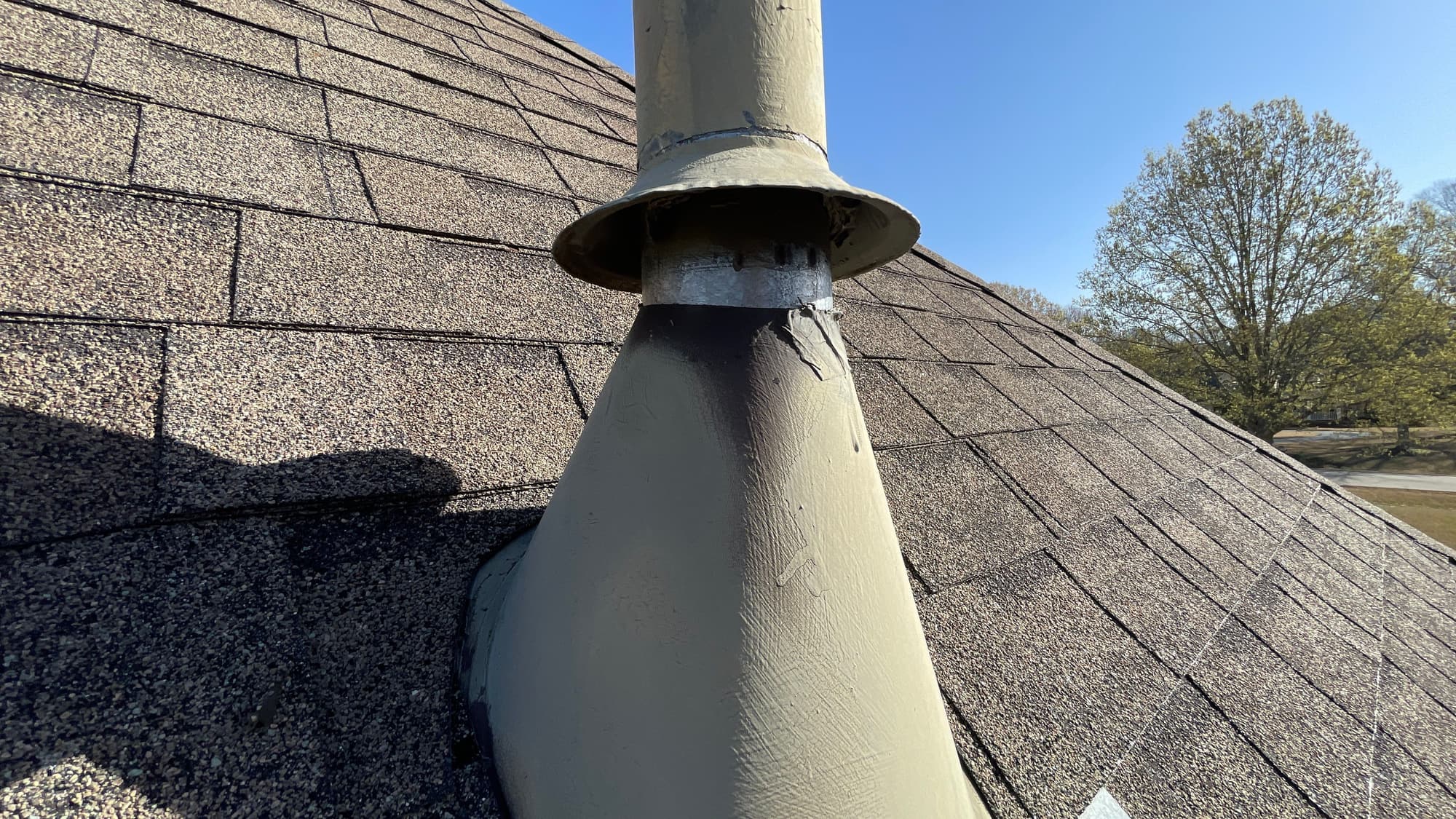
The Most Common Thing We Find
Of everything we see on roofs around Collierville, Germantown and Memphis, unsealed nail heads on flashing are the single most common issue. On the majority of roofs we inspect, at least some of them are bare.
This is not only an old-roof problem. On roofs under about 15 years old, it is the leading source of the slow leaks we trace. In many cases the nail heads were never sealed in the first place. That is an installation shortcut, not wear, and it has been there since the day the roof went on.
A single nail hole sounds trivial. A roof has hundreds of fastener points, though, and the ones on flashing sit exactly where water is already being directed: around pipes, along walls and down valleys.
Where Flashing Lives on Your Roof
Flashing is any piece of metal or formed material that seals a joint where the shingles alone cannot.
Pipe boots
The collars around plumbing vent pipes. Most have a rubber gasket that dries out and splits with age; in our experience that often happens within eight to ten years.
Chimneys
Step flashing along the sides and counter flashing set into the masonry. On wider chimneys, a small peaked cricket behind the chimney keeps water and debris from collecting there.
Sidewalls and dormers
Step flashing woven into each course of shingles where a roof slope meets a vertical wall.
Exhaust and attic vents
Each vent cap is fastened through its flange, and every one of those fasteners is a potential leak point.
Valleys
Where two slopes meet and the heaviest water flow on the roof runs. Debris collects here too.
Skylights and added equipment
Skylight flashing kits, satellite dish mounts and other items attached after the roof was installed.
Why Nobody Notices Until It Is Expensive
You cannot see a nail head on a pipe boot from the yard. Even if you could, a few drops at a time do not announce themselves. The water soaks into the decking, wicks along the wood, and is absorbed by insulation before any of it reaches the drywall.
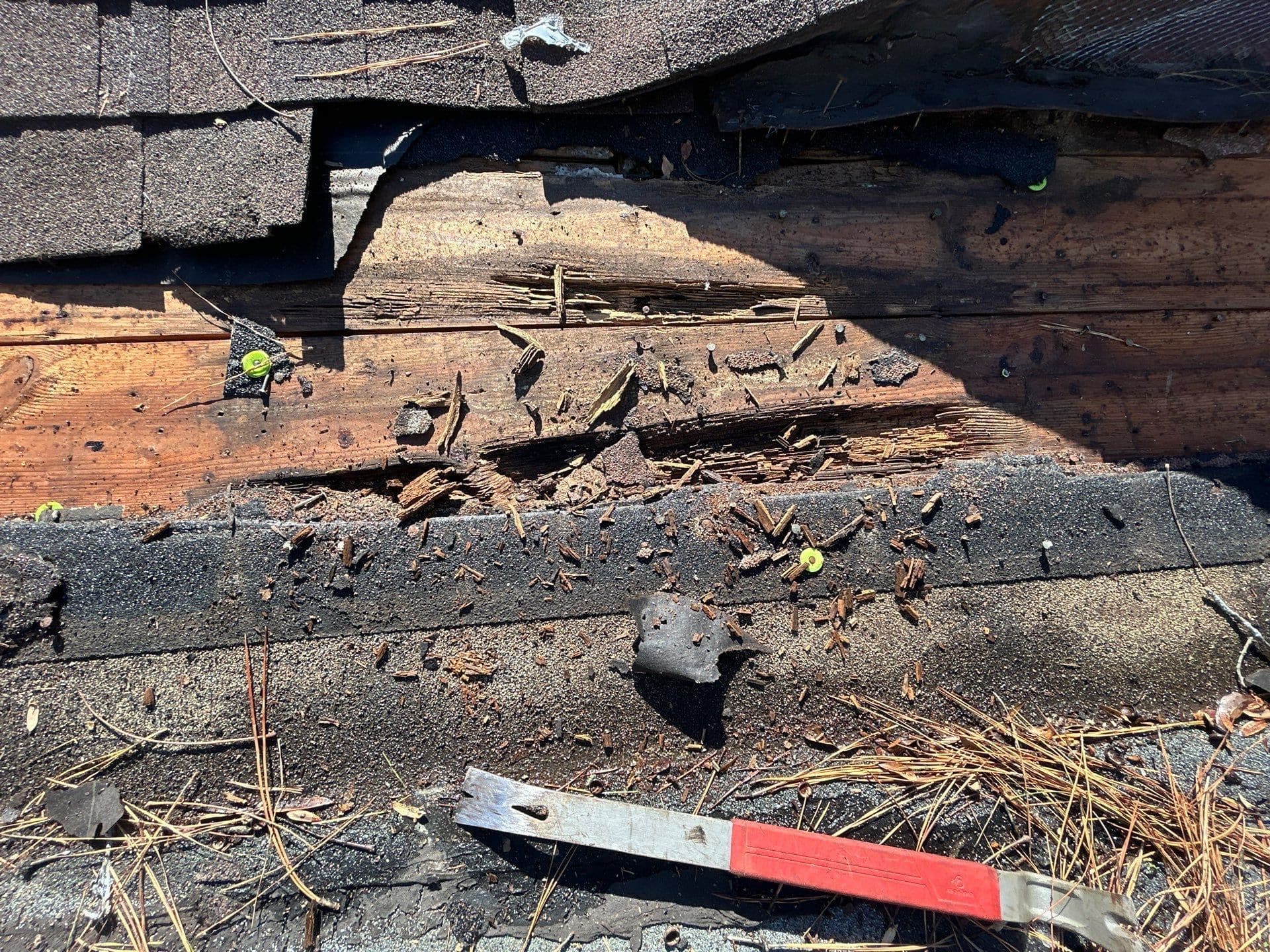
By the time a stain shows on a ceiling, the decking around that nail may be soft, the insulation below it wet, and the attic in that spot damp enough to grow mold. The repair is no longer a dab of sealant. It is new decking, new underlayment and new shingles over the affected area, plus whatever the interior needs.
What These Problems Look Like Up Close
Bare nail heads on flashing
ObservedShiny or rusted nail heads on a boot flange, vent cap or step flashing with no sealant over them.
Usually meansAn open path for water at every one. Sealing them is quick work when caught early.
Cracked sealant
ObservedSealant that was applied once but has dried, shrunk and split after years of sun.
Usually meansIt looks protected from a distance but is not. It needs to be cleaned off and redone.
Split pipe boot gasket
ObservedThe rubber collar around a vent pipe is cracked or pulling away from the pipe.
Usually meansWater runs straight down the pipe into the attic. The boot gets replaced, not just sealed.
Lifted step flashing
ObservedFlashing along a wall or chimney that has pulled away, or was tucked behind the siding incorrectly.
Usually meansWind-driven rain gets behind it. It needs to be re-set or replaced, not caulked over.
Nail pops
ObservedShingle nails that have backed out of the decking, lifting the shingle above them or coming through it.
Usually meansA sign of an active leak path, and often a clue that the attic is not ventilating well.
Typical findings, explained in general terms. What your roof needs depends on what we find on it.
What a Proper Fix Looks Like
- 01
Find every one
We check each penetration, wall joint and valley, not just the area above a stain. If one nail head is bare, others usually are too.
- 02
Seal what can be sealed
Sound flashing with exposed fasteners gets cleaned and sealed with roofing sealant.
- 03
Replace what cannot
Cracked boots and failed flashing come out. We dry and inspect what is underneath, then install new flashing and seal it properly.
- 04
Show you the work
You get photos of what we found and what we did, so the record is yours.
Sealant Is Maintenance, Not a Forever Fix
Roofing sealant lives in full sun on a dark surface. It holds up for years, but it does age, and NRCA lists replacing missing or damaged caulk among the basic tasks of preventive roof maintenance. That is why sealing flashing is part of every tune-up we do and part of our maintenance plans, rather than a one-time event.
If it has been several years since anyone looked closely at the flashing on your roof, that is reason enough to have it checked. It is one of the least expensive problems to fix on a roof, and one of the most expensive to ignore.