

Age Starts the Conversation. Condition Ends It.
In our experience across the Mid-South, a three-tab asphalt roof generally lasts about 16 to 18 years and an architectural shingle roof about 18 to 22. Those numbers are a useful reference point, and they are the reason a 17-year-old roof deserves a closer look. They are not a verdict.
Two roofs installed the same year on the same street can be in very different shape. One sits under heavy shade with a poorly ventilated attic and valleys that collect leaves every fall. The other gets steady airflow, clean valleys and an owner who has small problems fixed when they appear. The first may be finished at 15 years. The second may have honest life left at 20.
So when a homeowner calls and asks whether an older roof needs replacing, our answer is always the same: we need to see it. That means getting on the roof when conditions permit and it is safe, not judging it from the driveway.
What We Check Before We Recommend Anything
These are the conditions that move a roof from the repair column to the replacement column, or keep it where it is.
Shingle flexibility
ObservedWe gently lift a shingle tab in a few areas and watch how it and its neighbors respond.
Usually meansIf the shingle flexes and settles back, spot repairs are realistic. If it cracks, or the shingles beside it crack, the material has lost its flexibility and repairs will struggle to hold.
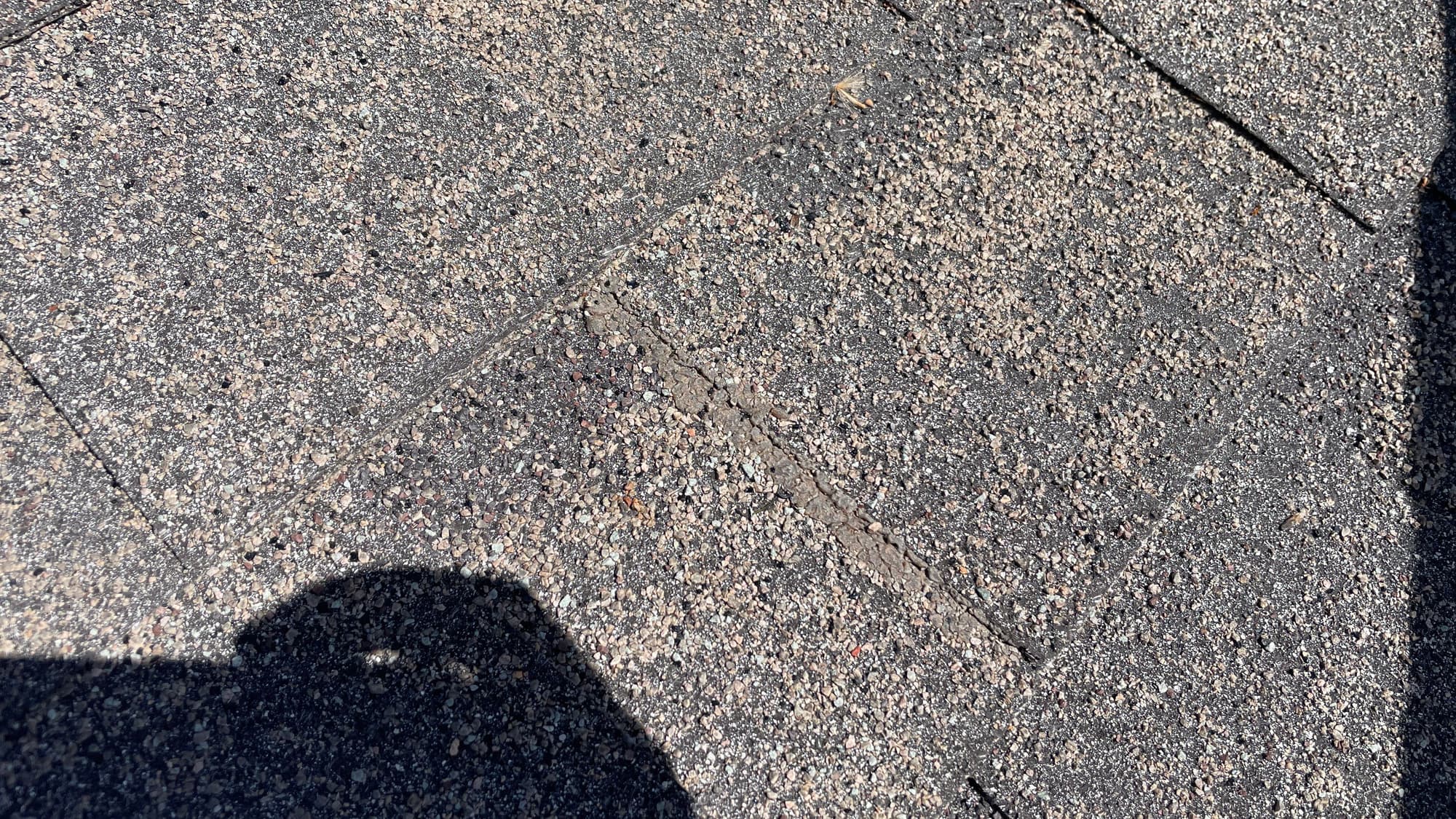
Granule wear
ObservedBare or smooth patches on the shingle surface, and heavy granule buildup in gutters and at downspout outlets.
Usually meansGranules shield the asphalt from the sun. Light, localized wear is normal aging. Widespread loss means the asphalt itself is exposed and deteriorating.
Decking underfoot
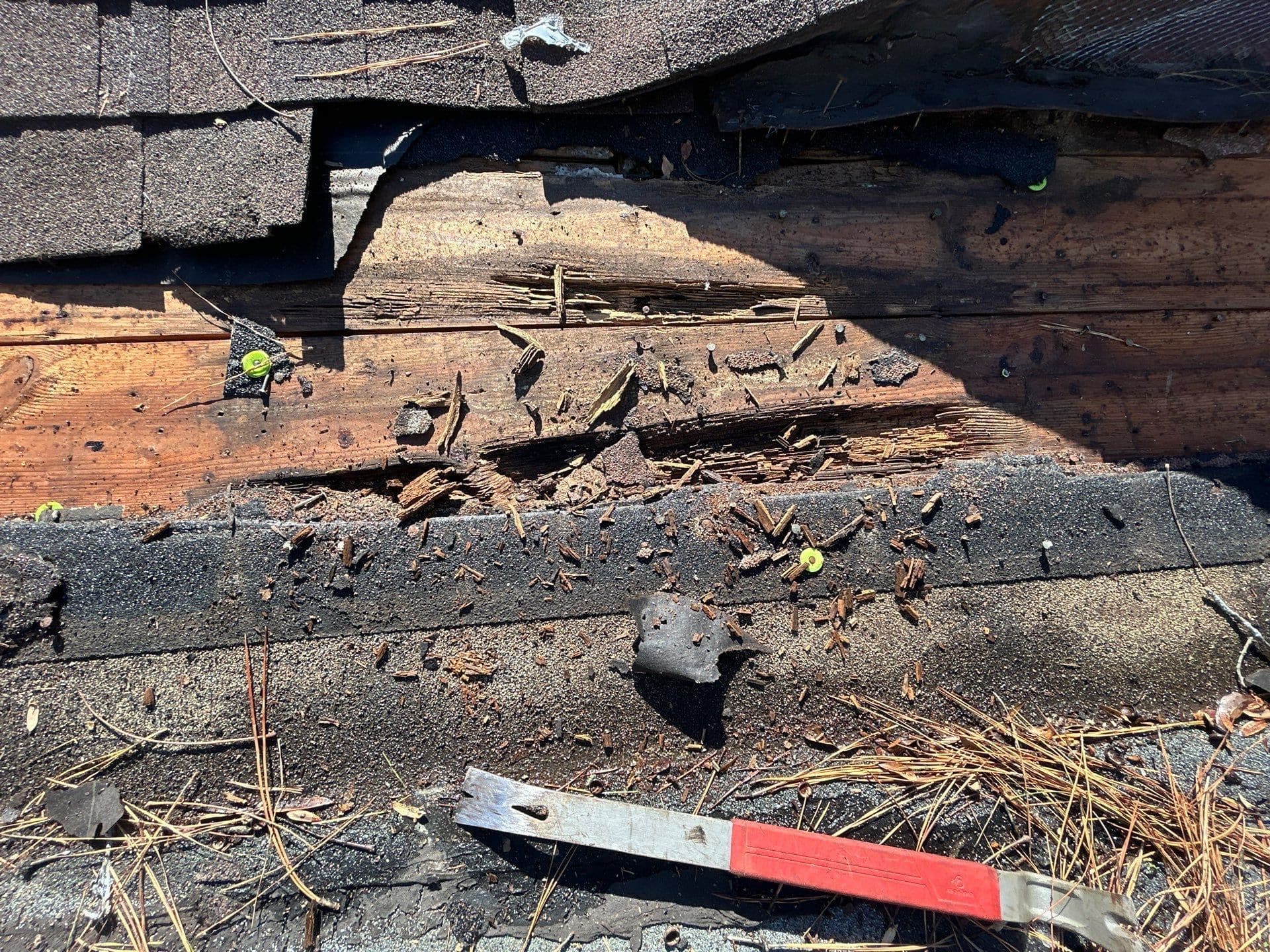
ObservedSoft or spongy spots as we walk the slopes, sagging lines between rafters, staining on the decking seen from the attic.
Usually meansOne soft area around a known leak is a repair. Soft areas in several places point to long-term moisture and a system that needs to come off.
Leak pattern
ObservedHow many places water is getting in, and whether each one traces to a specific flashing, boot or damaged shingle.
Usually meansA single, traceable leak is usually a repair. Water entering at several unrelated points suggests the roof as a whole has worn out.
Curling and buckling
ObservedShingle edges lifting or cupping, or ripples running across sections of a slope.
Usually meansA few lifted shingles from wind can be re-secured. Curling or buckling across large areas usually means the shingles and often the underlayment are past saving.
Flashing and penetrations
ObservedPipe boots, chimney and sidewall flashing, vents and the nail heads that hold them.
Usually meansFailures here are the most common source of leaks, and they are usually repairable even on an older roof, as long as the shingles around them are still sound.
Typical findings, explained in general terms. What your roof needs depends on what we find on it.
When Each Path Makes Sense
Preserve what you can
A repair is usually right when
- The shingles still bend without cracking
- The damage is in one area, such as a wind-lifted section or a cracked pipe boot
- The decking is solid outside the leak area
- The leak traces to a specific flashing or penetration
- Granule wear is light and localized
Replace what you must
Replacement is usually right when
- Neighboring shingles crack when one is lifted
- Granule loss is widespread and the asphalt is exposed
- Curling or buckling covers large sections
- Water is getting in at several unrelated points
- Decking is soft in more than one area
Many roofs sit in between. In those cases we may recommend a repair now and give you a separate replacement estimate so you can plan ahead without being rushed.
Color Match Is a Real Trade-Off
New shingles on an older roof will rarely match perfectly. Weathering changes the color of a roof over the years, and even the same shingle line can look different once it has been on a house for a decade. We match as closely as we can, and sometimes the result blends well. We will not promise that it will.
That difference is cosmetic, not structural. A well-done repair is watertight whether or not it matches. If the repair would sit on the front slope of the house and the appearance matters to you, say so during the assessment. It is a fair factor in the decision, and we would rather talk about it up front.
How We Get to a Recommendation
- 01
We walk the roof
When conditions permit and it is safe, we get on the roof and look at every slope, not just the area you called about.
- 02
We photograph what we find
Every problem area gets photographed, so you can see what we saw instead of taking our word for it.
- 03
We sort the findings
We separate what needs fixing now, what can wait and should be watched, and what is fine.
- 04
We explain the options in writing
You get a clear recommendation with the reasoning behind it. If both repair and replacement are reasonable, we lay out both.
- 05
You decide on your own timeline
There is no same-day pressure. A good recommendation still makes sense next week.
The Middle Path: Maintenance
When a roof is still sound, the most cost-effective thing you can do is keep it that way. Sealing exposed nail heads, re-securing loose shingles and clearing debris from valleys addresses the exact places where aging roofs start to leak. The national roofing contractors' association, NRCA, makes the same point in its homeowner guidance: problems found early can be corrected relatively easily, before they become widespread.
If your roof is borderline, maintenance does not cancel the replacement. It gives you time to plan for it rather than reacting to a ceiling stain.