

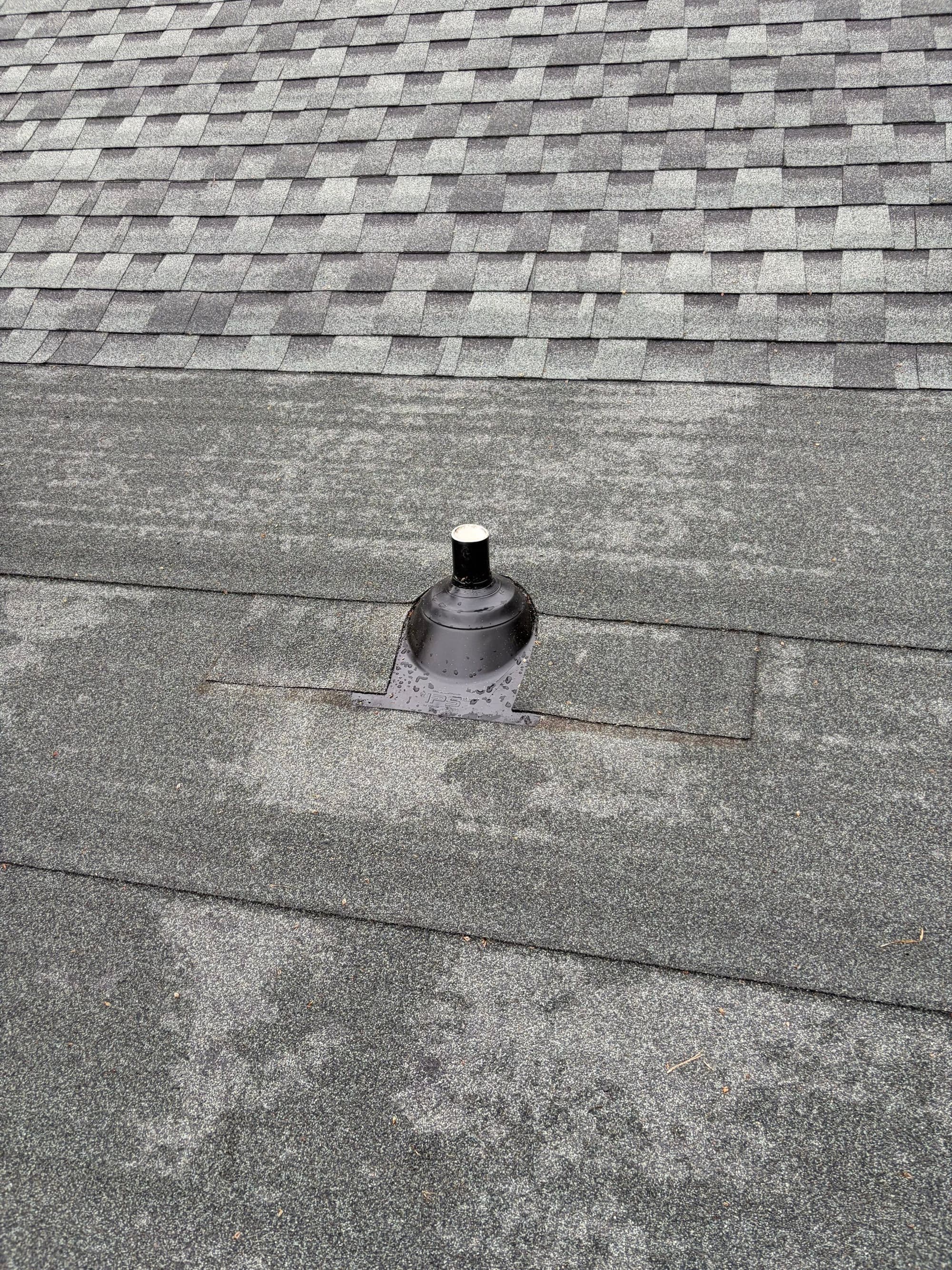
Same Roof, Two Ways to Look After It
Roofs rarely fail all at once. They fail at a handful of predictable spots: nail heads on flashing, pipe boots, shingle edges that wind has lifted, and valleys where leaves hold moisture against the shingles. Both a tune-up and a maintenance plan exist to deal with those spots while they are still small.
The difference is not really about the work on the roof. It is about who keeps track of when that work happens, and what you get alongside it.
Side by Side
One visit, no commitment
Roof tune-up
- Seal exposed nail heads on flashings and ridge caps
- Re-secure loose, lifted or wind-damaged shingles
- Clear debris from valleys, gutters and behind dormers
- Check pipe boots, vent flashing, and step and counter flashing
- Note granule loss, curling or cracking
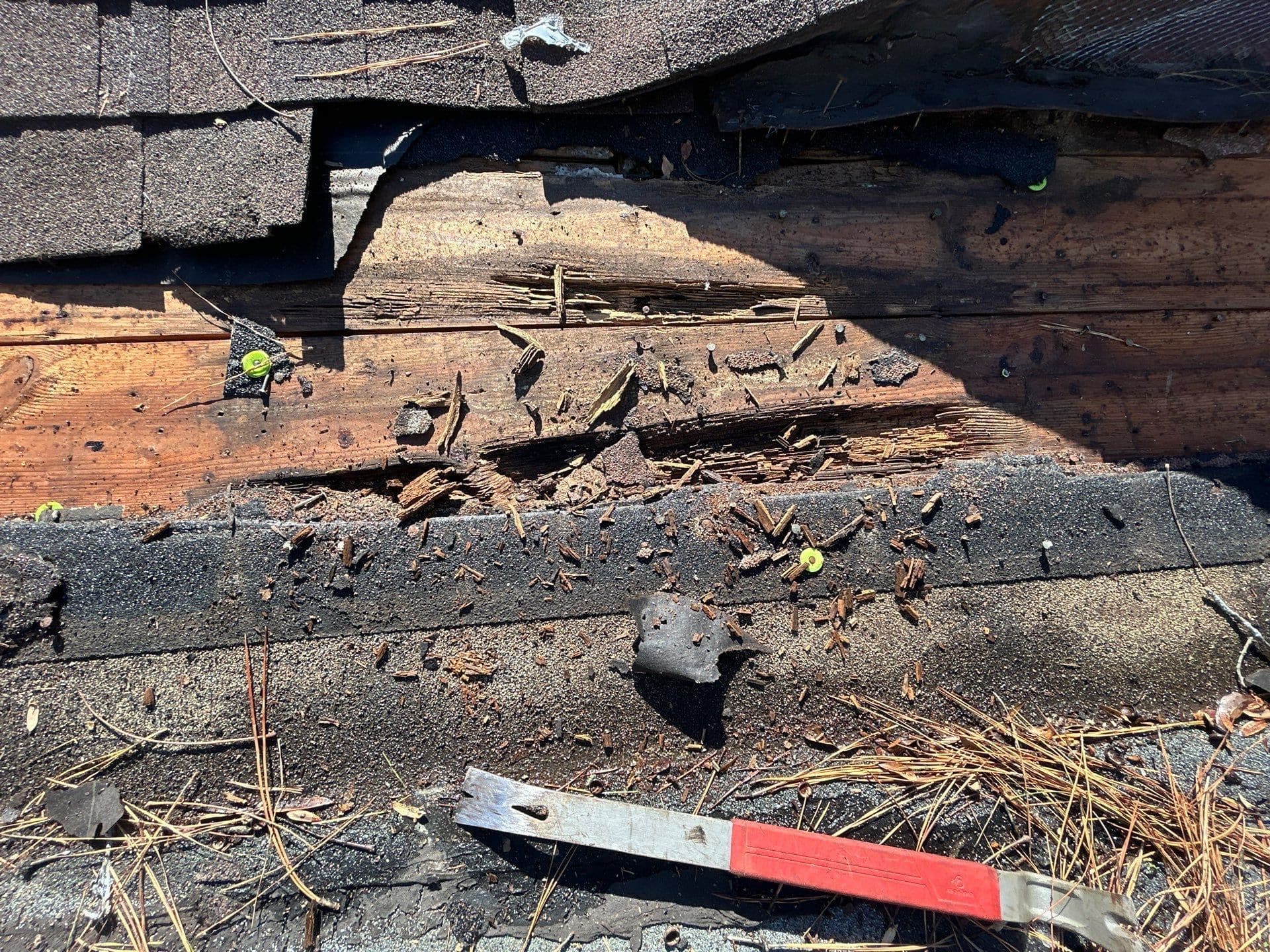
- Photos of what was found and addressed
- Priced after we see the roof; you book the next one when you choose
The work, on a schedule
Maintenance plan
- A 21-point roof inspection every year (twice a year on Total Shield)
- Roof and valley debris cleaning on every plan
- A digital photo report after every visit
- Seal and flashing touch-ups included on Preferred and Total Shield
- Free post-storm inspections on Preferred and Total Shield
- A repair discount of 5, 10 or 15 percent by plan
- Faster emergency response on the higher tiers
Put simply: the tune-up is the work. The plan is the work plus the schedule, the response time and the paper trail.
The Three Plans in Plain Terms
These are our current published prices. We confirm the details with you before you sign up.
Essentials, $399 a year
One 21-point inspection a year, roof and valley debris cleaning, a digital photo report and a 5% repair discount, with standard scheduling. Best for newer or well-kept roofs where you mainly want eyes on the roof every year and a record of its condition.
Preferred, $599 a year
Everything in Essentials plus gutter and downspout cleaning, up to five minor seal and flashing touch-ups, one free post-storm inspection a year, a 10% repair discount and 48-hour emergency response. Suited to homes with trees overhead and a roof in its middle years.
Total Shield, $799 a year
Inspections twice a year, unlimited minor seal and flashing touch-ups, two free post-storm inspections, a 15% repair discount, 24-hour emergency response, and the plan transfers to the new owner if you sell.
Which One Usually Fits
A one-time tune-up tends to suit homeowners who like to schedule things themselves and whose roof is in good shape. It is also a sensible single visit after HVAC work or anything else that put people on the roof, when you notice granules collecting in the gutters, or before you list a house for sale.
A plan tends to suit homes with trees overhanging the roof and gutters that fill quickly, roofs in their middle years where small seal and flashing failures are starting to show, and owners who know they will not remember to book a visit until something goes wrong. It also suits anyone who wants a storm check without having to argue for one.
How often a roof should be looked at depends on its age, its condition, the trees around it and how exposed it is to weather. Many roofs do well with a professional look every one to two years and after any major storm. A plan simply takes that decision off your list.
What Happens on a Plan Visit
- 01
You choose a plan
We start with a free assessment, so the plan fits the roof you actually have, and then we schedule your first inspection.
- 02
We get on the roof
Our crew works through the 21-point inspection on the roof itself. We never inspect from the driveway.
- 03
We clear and touch up
Debris comes out of the valleys and off the roof, and on Preferred and Total Shield we clean the gutters and handle the minor seal and flashing touch-ups your plan covers.
- 04
You get the report
A digital photo report shows what we found and what we did. If something needs more than a touch-up, the report says so and your plan's repair discount applies.
- 05
We come back on schedule
Once a year on Essentials and Preferred, twice a year on Total Shield, plus the post-storm inspections included in your plan.
Why the Paper Trail Is Worth Having
NRCA's homeowner guidance recommends keeping a running history of your roof from the day it is installed: the original scope and materials, then every inspection, repair and emergency after that. Its reasoning is practical. That record helps pin down the root cause of a problem and plan future work.
A photo report after every visit builds that history without any effort on your part. It is also useful when you sell the house and a buyer's inspector asks about the roof, and when your insurer reviews your policy. We cannot promise how either will weigh it, but a dated record of a maintained roof is a better position than memory.